

Blockchain scalability has long been the Achilles' heel of decentralized applications. As user demand and transaction volumes continue to surge, traditional Layer 1 networks like Ethereum face persistent congestion and high fees. Enter Rollup-as-a-Service (RaaS) platforms, a paradigm shift that is transforming how developers launch, scale, and manage app-chains with unprecedented efficiency.
What Are Rollup-as-a-Service Platforms and App-Chains?
At their core, rollups are specialized blockchains that process transactions off-chain while leveraging the security guarantees of a base Layer 1 like Ethereum. This architecture enables orders-of-magnitude improvements in throughput and cost efficiency. App-chains, meanwhile, are dedicated rollups tailored for specific decentralized applications or ecosystems, think gaming, DeFi protocols, or enterprise solutions.
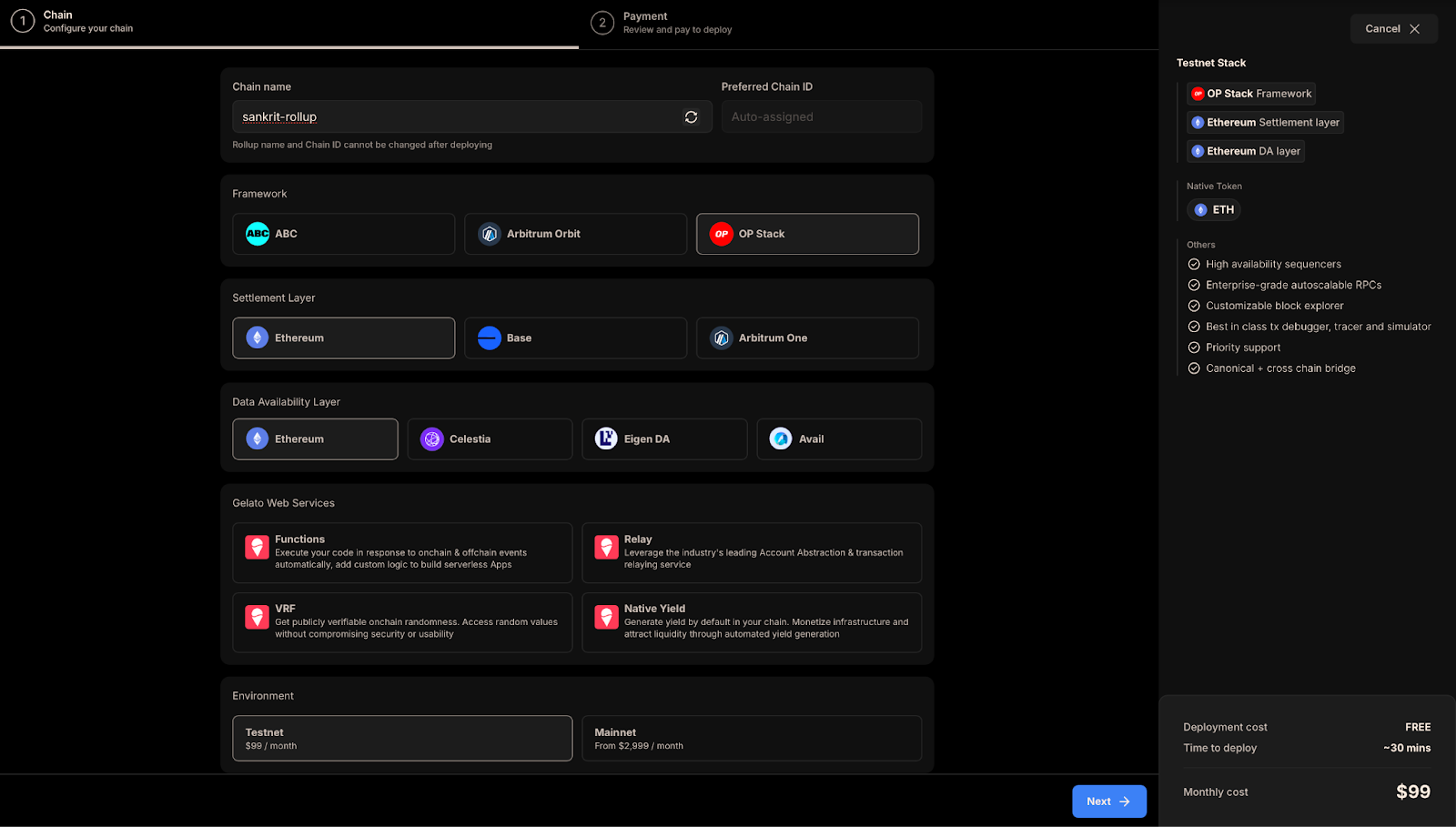
Rollup-as-a-Service platforms abstract away the complexity of deploying these custom blockchains. Instead of months spent on infrastructure engineering, RaaS lets teams spin up production-ready rollups in minutes through intuitive interfaces and robust APIs. The result is a new era of scalability where projects can focus on innovation rather than backend headaches.
Simplifying Blockchain Infrastructure: The RaaS Advantage
The greatest breakthrough offered by RaaS is infrastructure abstraction. Developers no longer need to assemble complex node clusters or maintain uptime themselves; leading providers guarantee enterprise-grade SLAs with 99.99% uptime and automated scaling. This reliability is crucial for apps handling high-frequency trading or real-time gaming.
- Simplified Deployment: Launching a custom rollup is as easy as configuring parameters like gas tokens, block intervals, or consensus models, no deep protocol knowledge required.
- Cost Efficiency: By shifting computation off-chain and eliminating mainnet congestion, projects enjoy dramatic fee reductions and avoid hiring specialized blockchain ops teams.
- Customization Without Compromise: Teams can tailor every aspect of their app-chain for unique use cases while retaining EVM compatibility for seamless integration with existing tools.
This streamlined approach not only accelerates time-to-market but also democratizes access to advanced blockchain technology for startups and enterprises alike. For a deeper dive into deployment speed advantages, see this guide on instant app-chain launches.
Pioneers in the RaaS Ecosystem: Who’s Leading the Charge?
The RaaS landscape has quickly matured in 2025 with several standout providers:
- Caldera: Known for rapid rollup deployment and developer-friendly tooling that enables teams to launch app-chains in minutes.
- AltLayer: Innovates with “flash layers”: ephemeral rollups optimized for events like NFT drops or gaming tournaments, while also supporting more permanent networks.
- Conduit: Offers secure, production-ready rollups built on modular frameworks such as OP Stack, prioritizing performance and reliability for mission-critical applications.
This competitive ecosystem drives continuous improvement in user experience, monitoring tools, and customization options, raising the bar for what’s possible in decentralized infrastructure.
Real-World Impact: How RaaS Powers Next-Gen Applications
The practical implications of Rollup-as-a-Service extend far beyond technical convenience. By removing infrastructure bottlenecks, RaaS platforms unlock new use cases that were previously cost-prohibitive or technically unfeasible on congested L1s.
- Gaming and Interactive Media: The gaming sector is a prime beneficiary. Dedicated gaming rollups provide sub-second confirmation times, low transaction fees, and customizable logic for in-game economies. This enables seamless experiences for millions of players, without the lag or unpredictability of shared blockspace.
- DeFi Protocols and Financial Services: Financial applications demand consistency, speed, and security. With RaaS-powered app-chains, DeFi teams can isolate their execution environments, ensuring stable performance even during network surges. Lower fees and predictable throughput translate to improved user retention and protocol growth.
- Enterprise Solutions: Enterprises can now deploy private or consortium rollups with granular control over consensus mechanisms and data privacy, all while benefiting from the security guarantees of Ethereum or other base layers.
This flexibility is a game-changer for sectors like supply chain management, digital identity, and tokenized real-world assets, domains where tailored blockchain architectures are essential.
The Road Ahead: RaaS as Critical Infrastructure
The trajectory is clear: Rollup-as-a-Service is fast becoming the backbone for scalable Web3 ecosystems. As more projects embrace modular architectures, we’re seeing an explosion in both the number and diversity of app-chains, each optimized for its own community’s needs.
Interoperability will play an increasingly central role. Expect to see cross-rollup communication standards mature rapidly, enabling frictionless asset transfers and composability across disparate app-chains. This will further erode the boundaries between standalone dApps and broader blockchain networks.
The economics are equally compelling. By drastically lowering infrastructure costs and simplifying ongoing maintenance, RaaS platforms empower lean teams to compete with well-funded incumbents. For founders focused on rapid iteration and product-market fit, not protocol engineering, this is a decisive edge.
If you’re considering launching your own application-specific chain or want to understand how instant deployment can reshape your go-to-market strategy, check out our detailed analysis at how app-chain projects use Rollup-as-a-Service for fast deployment. For those seeking one-click solutions tailored to their verticals, our breakdown at no-code rollup deployment platforms in 2025 offers actionable insights.
As the modular blockchain thesis matures through 2025 and beyond, expect Rollup-as-a-Service to remain at the forefront, fueling innovation while quietly handling the heavy lifting beneath tomorrow’s most ambitious decentralized applications.




No comments yet. Be the first to share your thoughts!