

Ethereum's scalability challenges have long forced developers to grapple with complex infrastructure setups for app-chains, but rollup-as-a-service platforms are flipping the script. No-code rollup deployment lets teams launch scalable blockchain rollups tailored for Ethereum app-chains without touching a single line of code or wrestling with node management. Providers like Conduit and Asphere deliver intuitive interfaces that handle everything from stack selection to mainnet activation, slashing deployment times from months to minutes.
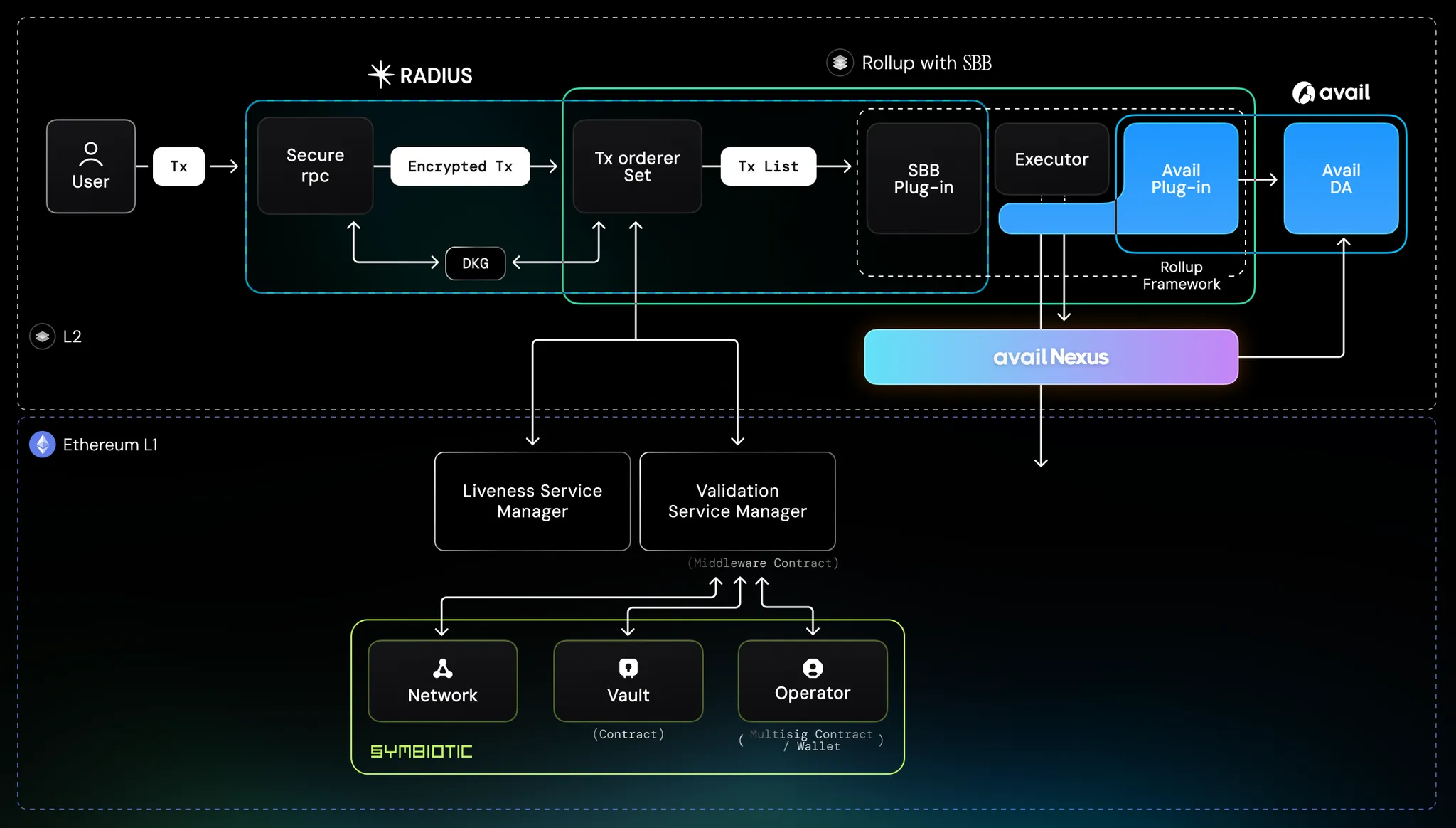
This shift isn't hype; it's a practical revolution. Traditional rollup builds demand deep expertise in zero-knowledge proofs or optimistic mechanisms, plus ongoing ops for sequencers and provers. RaaS abstracts that away, using abstract rollup technology to provide production-ready chains. Rollup-As-A-Service by abstractwatch. com exemplifies this, offering seamless ethereum app chain launch with customizable options and rock-solid uptime.
Why No-Code Matters in the RaaS Landscape
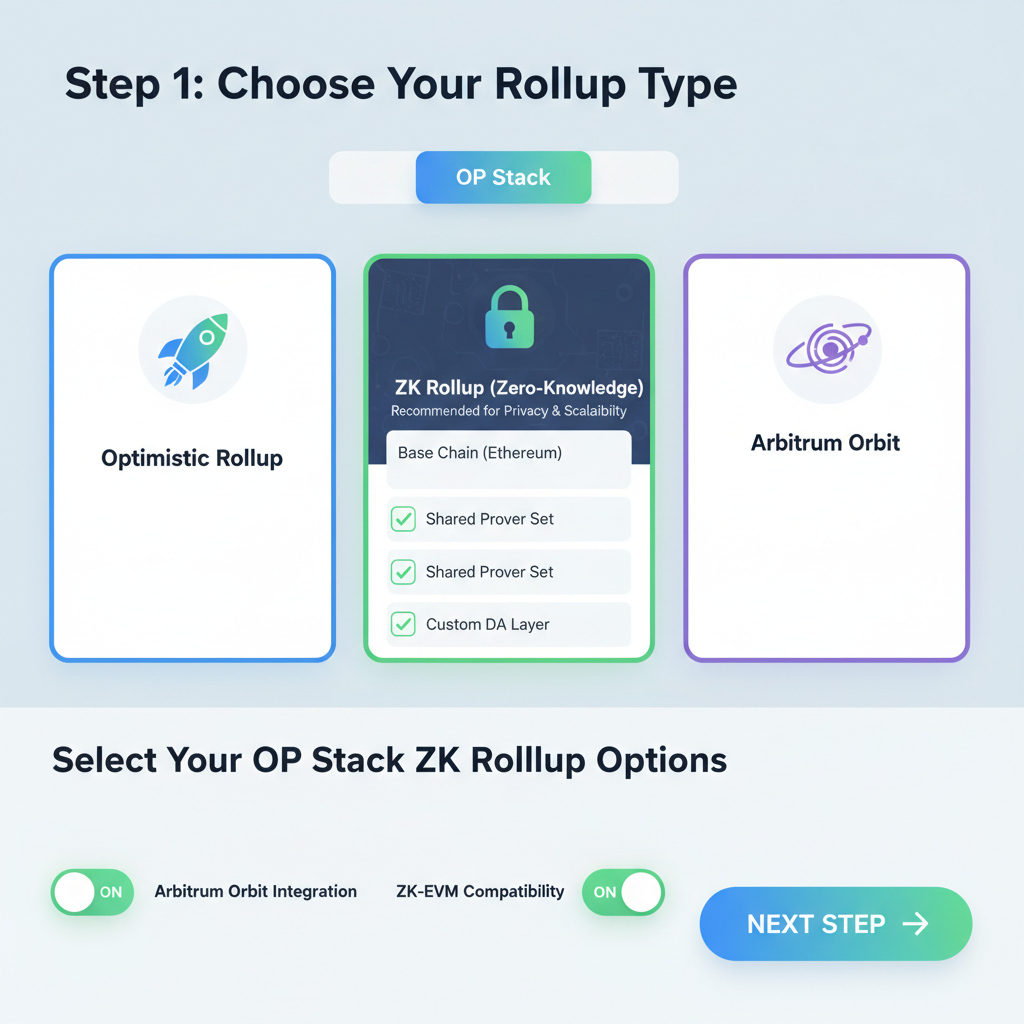
Developers today prioritize speed over boilerplate. No-code tools in RaaS mean you configure your rollup via dashboards: pick OP Stack or Arbitrum Orbit, tweak gas limits, integrate oracles, and deploy. Conduit's no-code deployer, for instance, supports multichain setups across Ethereum, Polkadot, and Polygon ecosystems, as highlighted in recent Binance analyses. This democratizes access, letting startups and enterprises bypass the engineering hurdles that sidelined smaller teams.
Consider the alternatives. Self-hosting a rollup? Expect weeks of debugging EVM compatibility and security audits. Public L2s like Arbitrum or ZKsync? Fine for dApps, but app-chains demand sovereignty. RaaS bridges that gap, with platforms like Caldera earning praise for reliability in 2026 forecasts from Vocal Media. The result: focused innovation on your protocol, not plumbing.

Top RaaS Providers Driving No-Code Innovation
The RaaS field is crowded, but leaders stand out for no-code prowess. Alchemy's 2025 list spotlights Arbitrum, ZKsync, and OP Mainnet as foundational, while newer entrants push boundaries.
Key No-Code RaaS Providers
- Conduit: No-code deployer for OP Stack and Arbitrum Orbit rollups; deploy in minutes with customizable stacks and toolkits.
- Caldera: Reliable platform for custom rollups; praised for ease of use and production-grade deployments.
- Asphere: Arbitrum no-code deployer for testnet and mainnet blockchains; seamless launch and management.
- Zeeve: Polygon CDK Sandbox for easy zk-rollup launches without deep expertise.
- AltLayer: RaaS for app-specific chains across Ethereum, Polkadot, Polygon; deploy in minutes.
Conduit shines with plug-and-play stacks, letting you spin up chains complete with developer toolkits. Asphere's Arbitrum collab delivers seamless testnet-to-mainnet transitions, ideal for iterative builds. Zeeve's zk-rollup sandbox requires zero blockchain PhD, echoing Nansen's take on simplified app-specific chains. And for those eyeing Ethereum purity, native rollup research from Ethereum. org unlocks L1-grade security without councils.
Streamlining Ethereum App-Chain Launches Step-by-Step
Launching an app-chain starts with stack choice: optimistic for familiarity, ZK for compression. No-code interfaces guide you. Select parameters, connect wallets, and hit deploy. Platforms manage sequencing, data availability, and settlements automatically. Tatum. io notes this eases Web3 app scaling, comparing optimistic vs. ZK trade-offs upfront.
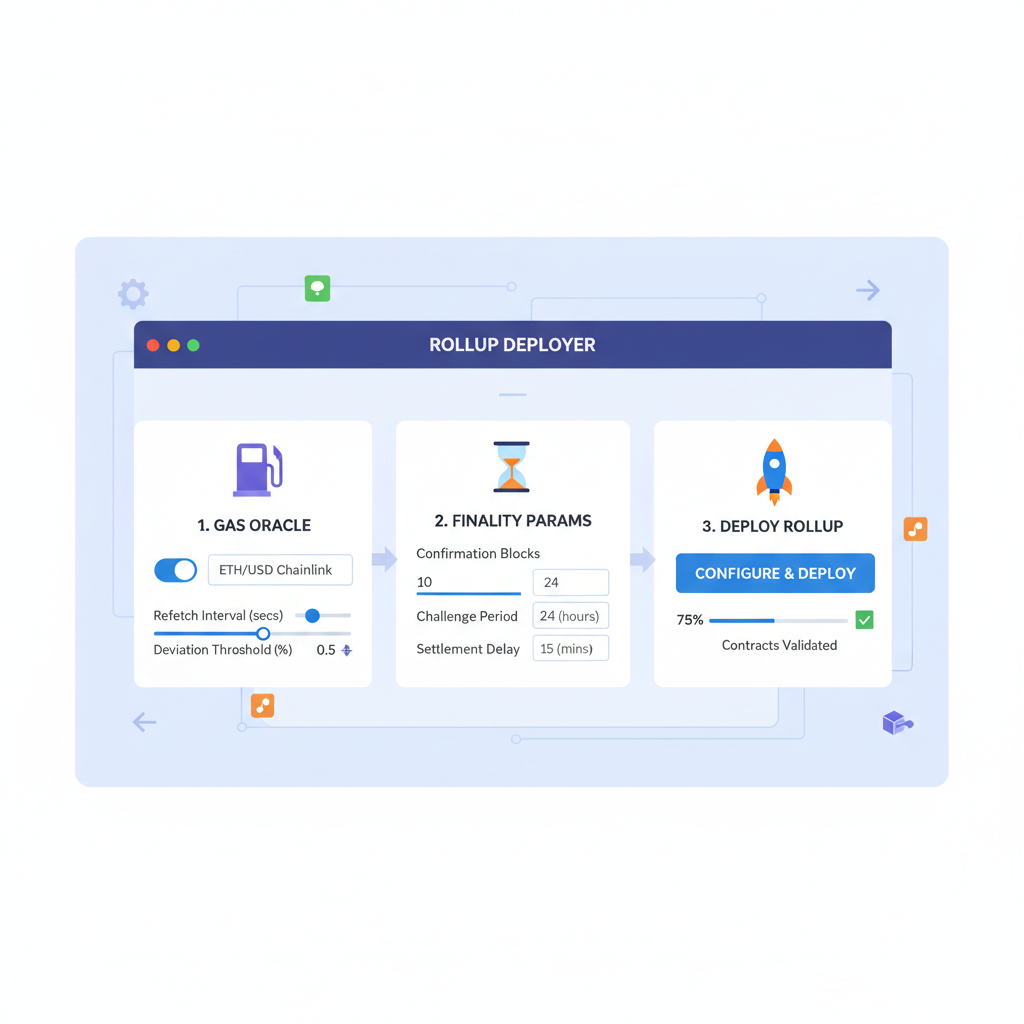
Customization remains king. Tune finality times, enable native bridges, or layer on restaking. Dysnix's executive guide underscores how RaaS boosts throughput by offloading TX processing. For Ethereum loyalists, this means app-chains inheriting L1 security while scaling independently. Abstractwatch's Rollup-As-A-Service takes it further, integrating rollup as a service with expert support for bespoke needs.
Real-world wins abound. AltLayer's RaaS deploys chains across ecosystems in minutes, per Binance. Supra. com ranks ZK leaders like Polygon and Starkware, now accessible sans code. The payoff? Lower costs, faster iterations, and broader adoption for your vision.
Security remains non-negotiable, and no-code RaaS platforms deliver it baked in. Ethereum L1 settlement layers ensure fraud proofs or validity checks hold firm, while providers manage sequencer uptime and fault tolerance. Native rollups, as explored in Ethereum Research, eliminate centralized councils, granting app-chains full L1 execution superpowers without compromises.
Provider Showdown: Which RaaS Fits Your Ethereum App-Chain?
Choosing demands scrutiny. Factors like stack flexibility, deployment speed, and Ethereum alignment separate contenders. Alchemy's RaaS comparison urges evaluating uptime, costs, and customization. Vocal Media's 2026 watchlist flags Caldera for reliability and Conduit for plug-and-play, but Ethereum app-chain launches thrive on deep L1 integration.
RaaS Provider Comparison Table
| Provider | Supported Stacks | No-Code Deployment Time | Ethereum App-Chain Strengths | Pricing Model |
|---|---|---|---|---|
| Conduit | OP Stack/Arbitrum Orbit | Minutes | Multichain flexibility | Usage-based |
| Caldera | Custom rollups | Hours | Reliability/uptime | Tiered |
| Asphere | Arbitrum Orbit | Minutes | Testnet-mainnet seamless | Subscription |
| Zeeve | Polygon CDK ZK | Minutes | Sandbox ease | Pay-per-chain |
| Abstractwatch | Abstract rollup tech | Minutes | Ethereum purity/customizable | Expert support included |
This table cuts through the noise. Abstractwatch edges ahead for ethereum app chain launch needs, blending abstract rollup technology with hands-on support that others skimp on. Unlike Zeeve's Polygon tilt, it locks into Ethereum's ecosystem for sovereign scalability.
Cost-wise, expect pay-per-use or subscriptions starting low, scaling with TVL. No infrastructure CapEx means startups deploy lean. Nansen. ai emphasizes app-specific chains as the future; RaaS makes it immediate.
Deploying Your No-Code Rollup: Hands-On Guide
Enough theory, time for action. No-code rollup deployment distills to dashboard clicks, but precision matters. Pick Ethereum-aligned stacks for optimal data availability via blobs or calldata. Platforms auto-handle provers and bridges, freeing you for dApp logic.
Deploy No-Code Ethereum App-Chains with RaaS: 6-Step Guide
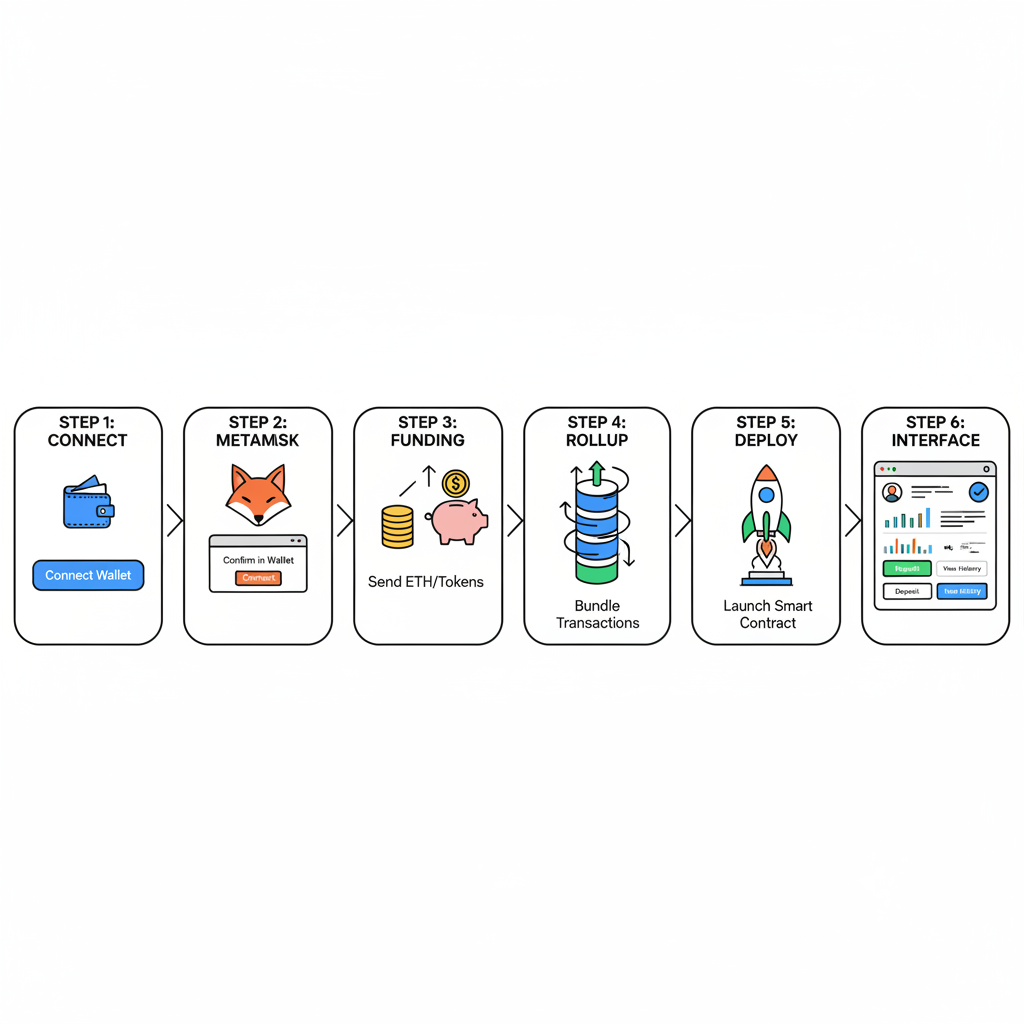
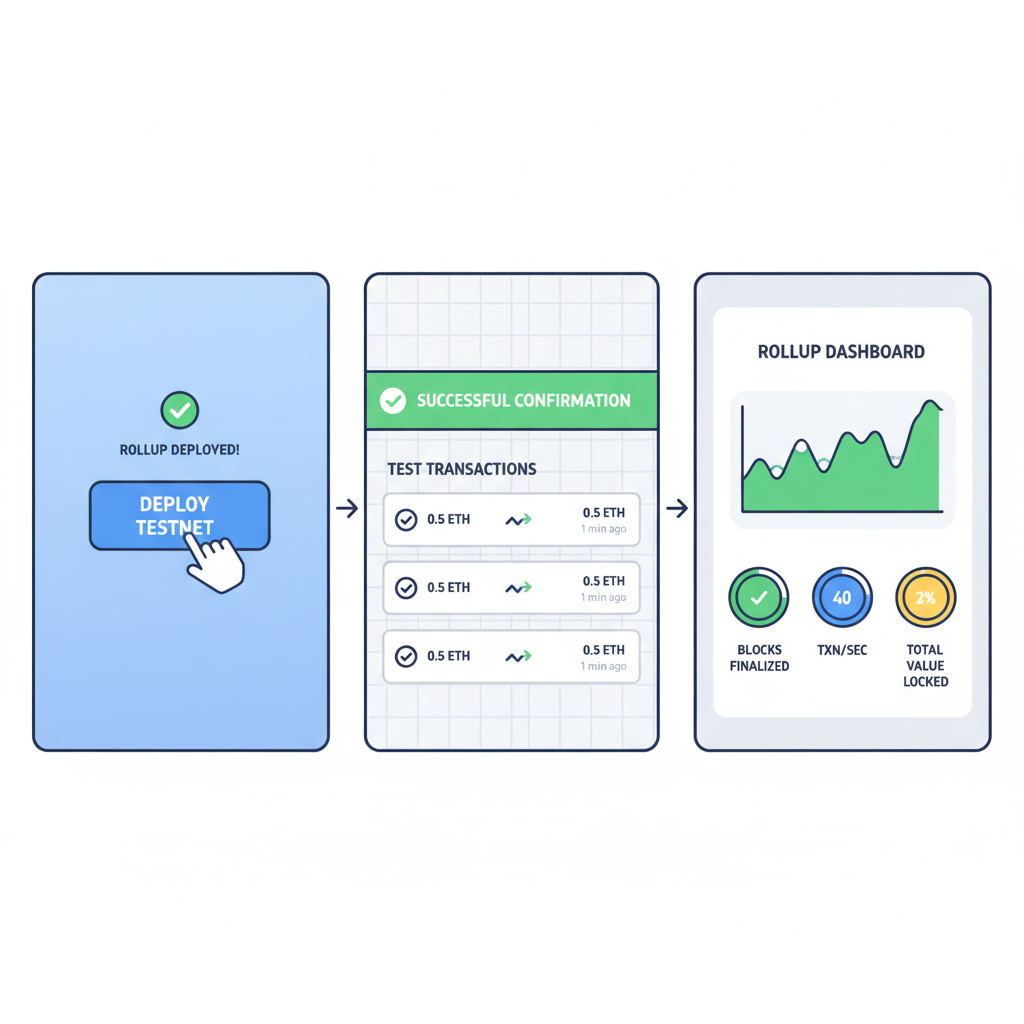
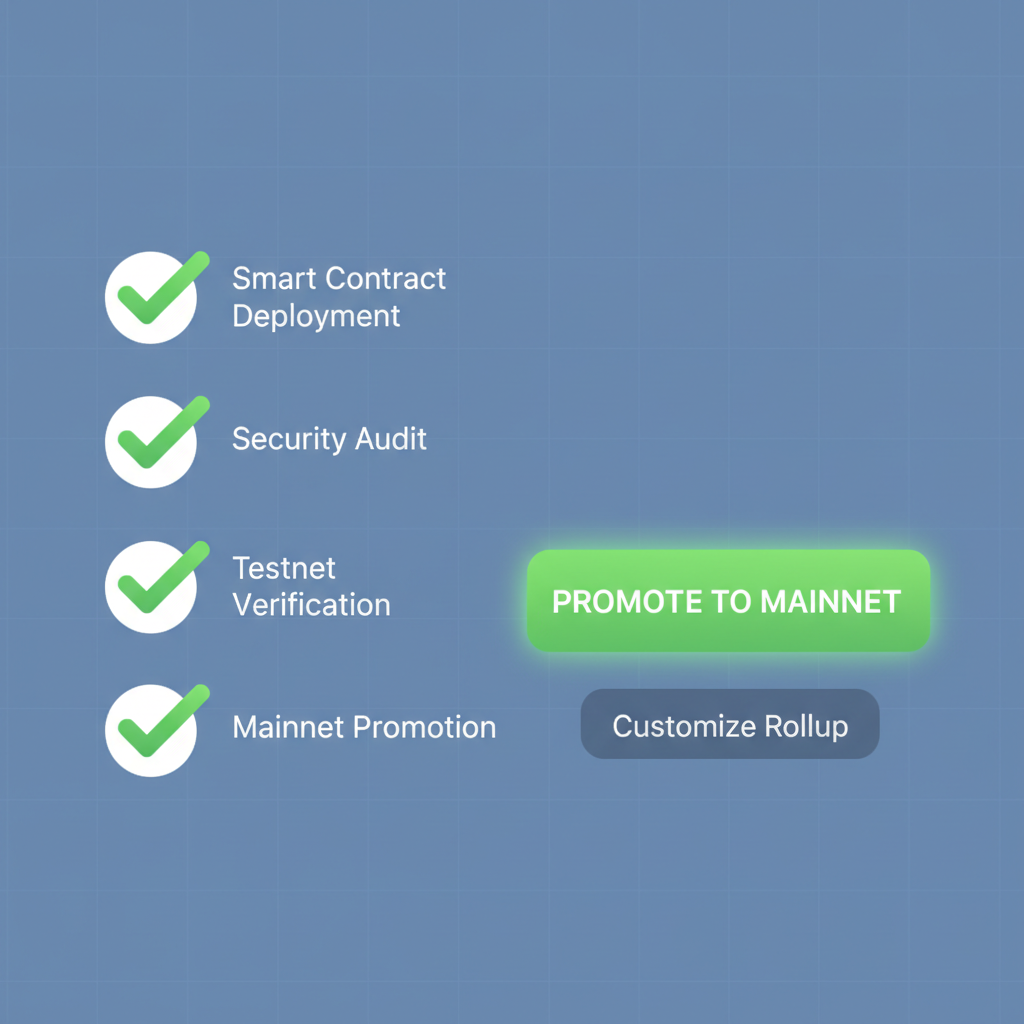
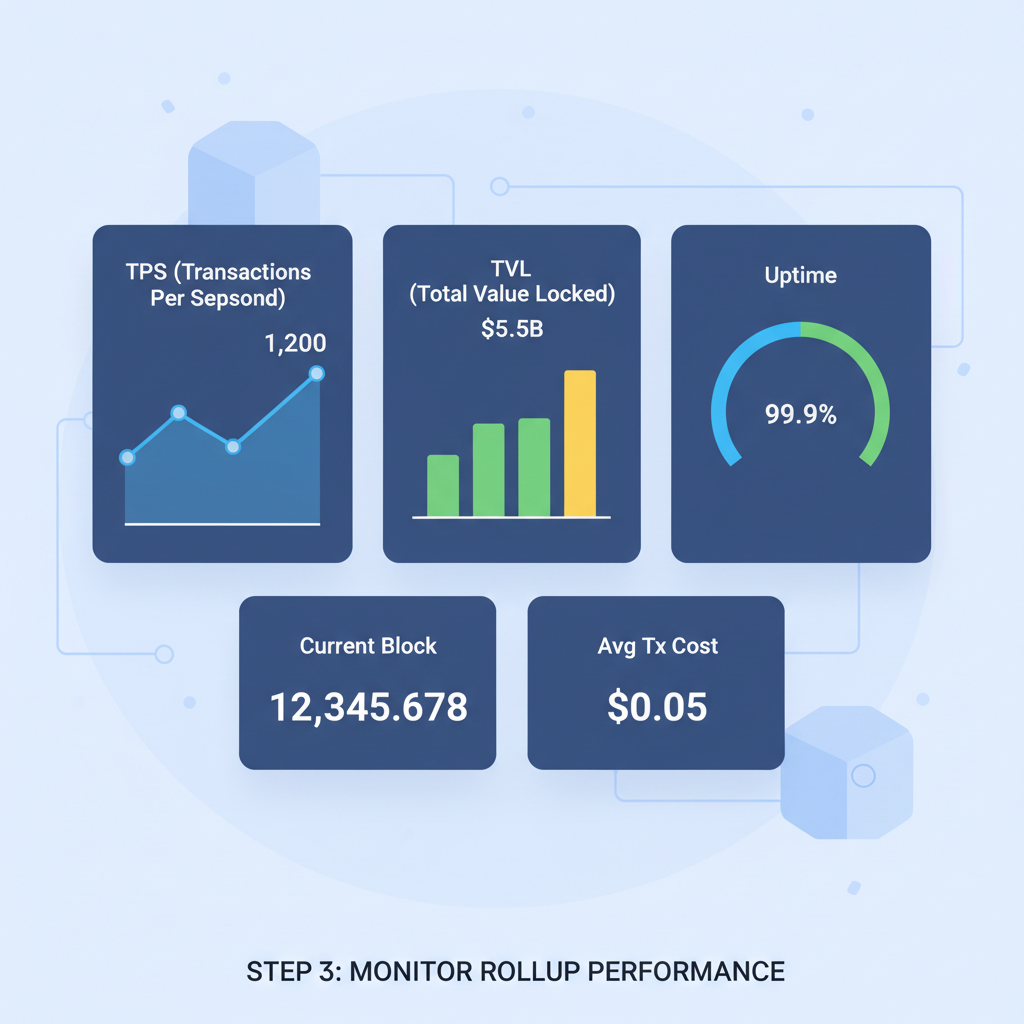
Follow this, and you're live. Deeper dives reveal tweaks like restaking hooks for yields. Abstractwatch streamlines further, offering templates for DeFi or gaming app-chains.
Challenges? Minimal. Watch for sequencer centralization risks, mitigated by provider SLAs. Migration from L1 dApps? Bridges and EVM parity ease it. Tatum. io weighs optimistic latency against ZK proofs; hybrid stacks emerge as sweet spots.
The edge goes to teams wielding RaaS now. Supra. com's ZK rankings show Polygon and ZKsync powering Aave, Curve; replicate via no-code. Dysnix notes throughput jumps from offchain TX batches. For Ethereum maximalists, this scales without dilution.
Abstractwatch's Rollup-As-A-Service stands tall, fusing no-code ease with enterprise-grade tools. Launch scalable blockchain rollups today, sidestep ops drudgery, and capture the app-chain wave. Your protocol deserves sovereignty; RaaS delivers it frictionlessly.




No comments yet. Be the first to share your thoughts!