

Why abstract dials matter in 2026
The watch industry is undergoing a quiet but decisive shift. In 2026, the dial is no longer just a functional interface for reading time; it has become the primary canvas for wearable art. Collectors are increasingly moving away from traditional legibility toward pieces that prioritize texture, material depth, and artistic expression. This trend reflects a broader desire for watches that serve as personal artifacts rather than mere instruments.
This evolution is driven by advancements in materials and manufacturing. Brands are now experimenting with natural stones like onyx, agate, and lapis lazuli, carving or inlaying them to create unique, non-repetitive patterns. Unlike stamped or printed dials, these natural materials ensure that no two watches are exactly alike, adding a layer of exclusivity that appeals to modern collectors. The tactile quality of these surfaces also engages the wearer, turning the wrist into a point of interest.
As case sizes trend smaller and sleeker, the dial design becomes bolder to compensate for the reduced surface area. High-tech finishes and vibrant colors are being layered with organic textures to create depth. This combination of premium materials and technical precision defines the current landscape, where a watch is judged not just by its movement, but by the visual story its dial tells.
5 Abstract Watch Dials Defining 2026
The 2026 horological landscape is defined by a shift toward geological abstraction, where materials like polished onyx, banded agate, and deep lapis lazuli replace traditional indices. This collection highlights five distinct dial executions that leverage these raw textures to create high-contrast, tactile surfaces for the modern collector.
-

Onyx dial with mother-of-pearl inlay
The Van Cleef & Arpels Midnight Jour Nuit combines deep black onyx with delicate mother-of-pearl inlays, creating a striking lunar contrast. This dial exemplifies high jewelry watchmaking, where precious stones are meticulously arranged to mimic celestial phases. The polished onyx provides a void-like backdrop, allowing the iridescent pearl details to catch light dynamically. It transforms the wrist into a canvas of nocturnal elegance, prioritizing material luxury over traditional numerals. -
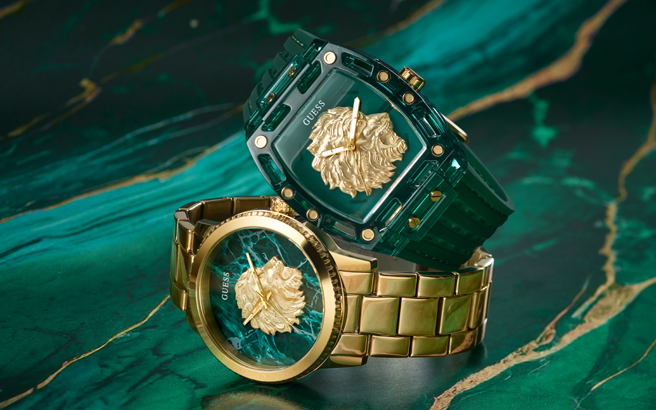
Lapis lazuli dial with gold starburst
Vacheron Constantin’s Tribute to The Celestial utilizes genuine lapis lazuli, often flecked with natural pyrite, to evoke the night sky. Gold starburst markers are applied directly onto the stone, integrating metallurgy with geology. This approach avoids printed indices, relying instead on the stone’s inherent texture and the precision of hand-applied gold elements. The result is a dial that feels both ancient and astronomically precise, celebrating the raw beauty of semi-precious materials. -

Agate dial with geometric lacquer patterns
The Spinnaker Fleuss 40 Razzle Dazzle features an agate dial enhanced with geometric lacquer patterns, merging natural stone with industrial design. The agate’s banded structure provides a unique, non-repeating background, while the lacquer adds sharp, modern lines that cut through the organic texture. This juxtaposition creates a visually complex surface that shifts with viewing angles. It demonstrates how contemporary aesthetics can coexist with traditional stone dialing techniques. -

Enamel dial featuring hand-painted abstract art
Enamel dials offer a smooth, glass-like surface ideal for intricate hand-painted abstract art. Artists apply layers of colored enamel, firing the piece multiple times to achieve depth and vibrancy. Each dial becomes a unique miniature painting, capturing spontaneous brushstrokes or structured compositions. This technique requires immense skill, as errors cannot be corrected once fired. The result is a durable, luminous canvas that elevates the watch to wearable art. -

Industrial dial with exposed gear abstraction
Bvlgari’s Octo Finissimo iterations often explore industrial aesthetics, with dials featuring exposed gear abstractions. These designs reveal the mechanical soul of the movement, using skeletonized elements to create depth and complexity. The interplay of polished steel and matte finishes highlights the precision engineering within. This approach appeals to collectors who appreciate the visible mechanics of horology, turning the dial into a window into the watch’s inner workings.
How to choose an abstract dial watch
Selecting a watch with an abstract dial requires balancing artistic expression with the fundamental purpose of timekeeping. Unlike traditional dials that rely on high-contrast indices, abstract designs often use texture, material depth, or geometric fragmentation to tell time. The goal is to find pieces that offer understated elegance without sacrificing legibility, a balance where materials like onyx, agate, or lapis lazuli must serve the function as much as the form.
Prioritize legibility over novelty
An abstract dial should never obscure the time. When evaluating options, look for silver, white gold, or steel combinations that provide clean contrast against darker or textured backgrounds. A dial made from agate or lapis may be visually striking, but if the hour markers blend into the stone’s natural veining, the watch fails as a tool. Prioritize designs where the abstract element enhances the reading experience rather than competing with it.
Assess material durability
Abstract dials often rely on semi-precious stones or intricate inlays, which can be more susceptible to damage than standard enamel or lacquer. Onyx, for instance, is hard but brittle; a sharp impact can chip the edge. When choosing, consider your daily activities. If you work with your hands, a polished lapis dial might require more care than a brushed steel abstract design. Ensure the movement is robust enough to handle the weight and balance of the dial material, which can affect long-term accuracy.
Verify brand heritage and serviceability
Abstract dials are often associated with niche or independent watchmakers who specialize in unconventional materials. While this offers unique aesthetics, it can complicate future maintenance. Before purchasing, confirm that the brand has a established service network or a clear policy for dial repairs. A watch with a custom agate dial is only as good as the brand’s ability to replace it if it cracks. Stick to established houses or reputable independents with proven track records in handling complex dial constructions.
Final selection checklist
-
Legibility: Can you read the time in low light without strain?
-
Material Integrity: Are the stones or inlays securely set and resistant to daily wear?
-
Service Network: Does the brand offer reliable after-sales support for complex dials?
-
Style Consistency: Does the abstract design complement your existing wardrobe and other accessories?


As an Amazon Associate, we may earn from qualifying purchases.
No comments yet. Be the first to share your thoughts!