

5 Abstract Watch Designs Defining 2026
The 2026 watch landscape moves beyond minimalist minimalism, favoring bold, sculptural forms that prioritize material texture and geometric abstraction. These five timepieces define the year’s aesthetic shift through distinct structural elements rather than vague futurism, showcasing how concrete design choices are reshaping luxury horology.
-
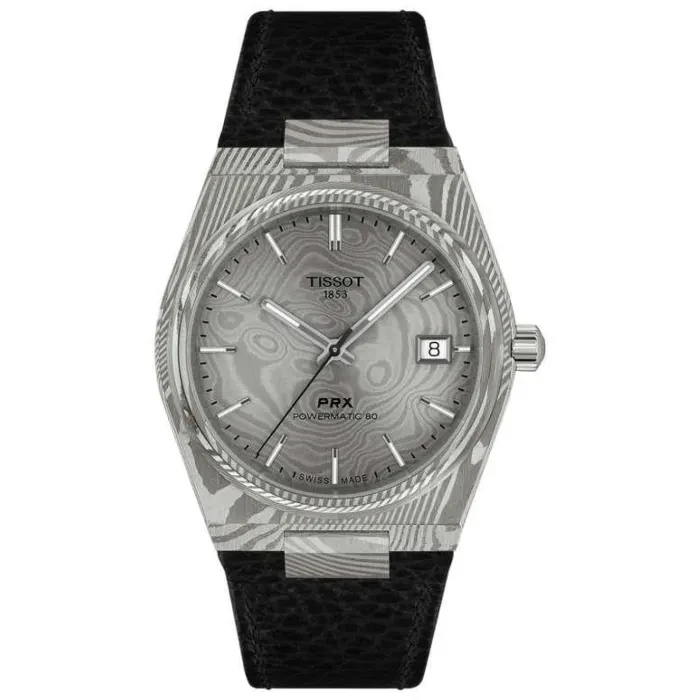
Tissot PRX Powermatic 80 Skeleton
The Tissot PRX Powermatic 80 Skeleton strips away the dial to reveal the intricate dance of gears beneath. Its integrated steel bracelet and sharp, angular case echo 1970s aesthetics while showcasing modern mechanical precision. The openworked face allows light to catch the polished bridges, creating a dynamic interplay of depth and shadow. This accessible luxury piece proves that skeletonization need not be exclusive, offering a transparent window into horological craftsmanship for everyday wear. -

Hublot Big Bang Sang Bleu
Hublot collaborates with tattoo artist Christian Jankowski to produce the Big Bang Sang Bleu, featuring a black ceramic case adorned with intricate blue geometric tattoos. The dial mirrors these tribal patterns, transforming the watch face into a canvas of permanent ink aesthetics. This fusion of haute horlogerie and street art culture challenges traditional luxury norms. The matte black finish absorbs light, making the vibrant blue details pop with striking contrast against the wrist. -

Richard Mille RM 07-01 Automatic
The Richard Mille RM 07-01 Automatic redefines feminine luxury with its tonneau-shaped case and vibrant, translucent dials. Designed for active women, it combines robust shock resistance with delicate aesthetics, featuring sapphire crystal cases that reveal the automatic movement inside. The colorful gradients shift from pink to blue, mimicking summer skies. This timepiece balances technical resilience with artistic flair, proving that high-performance mechanics can coexist with elegant, playful design. -
MB&F HM10 Superdimension
MB&F’s HM10 Superdimension abandons traditional watchmaking conventions for a radical, sculptural approach. Its asymmetrical case houses a floating tourbillon that appears to hover in mid-air, supported by minimal bridges. The design prioritizes kinetic art over time-telling, with exposed gears and a distinctive, organic silhouette. This piece challenges the viewer’s perception of space and mechanics, offering a wearable sculpture that celebrates the beauty of raw movement and unconventional engineering. -
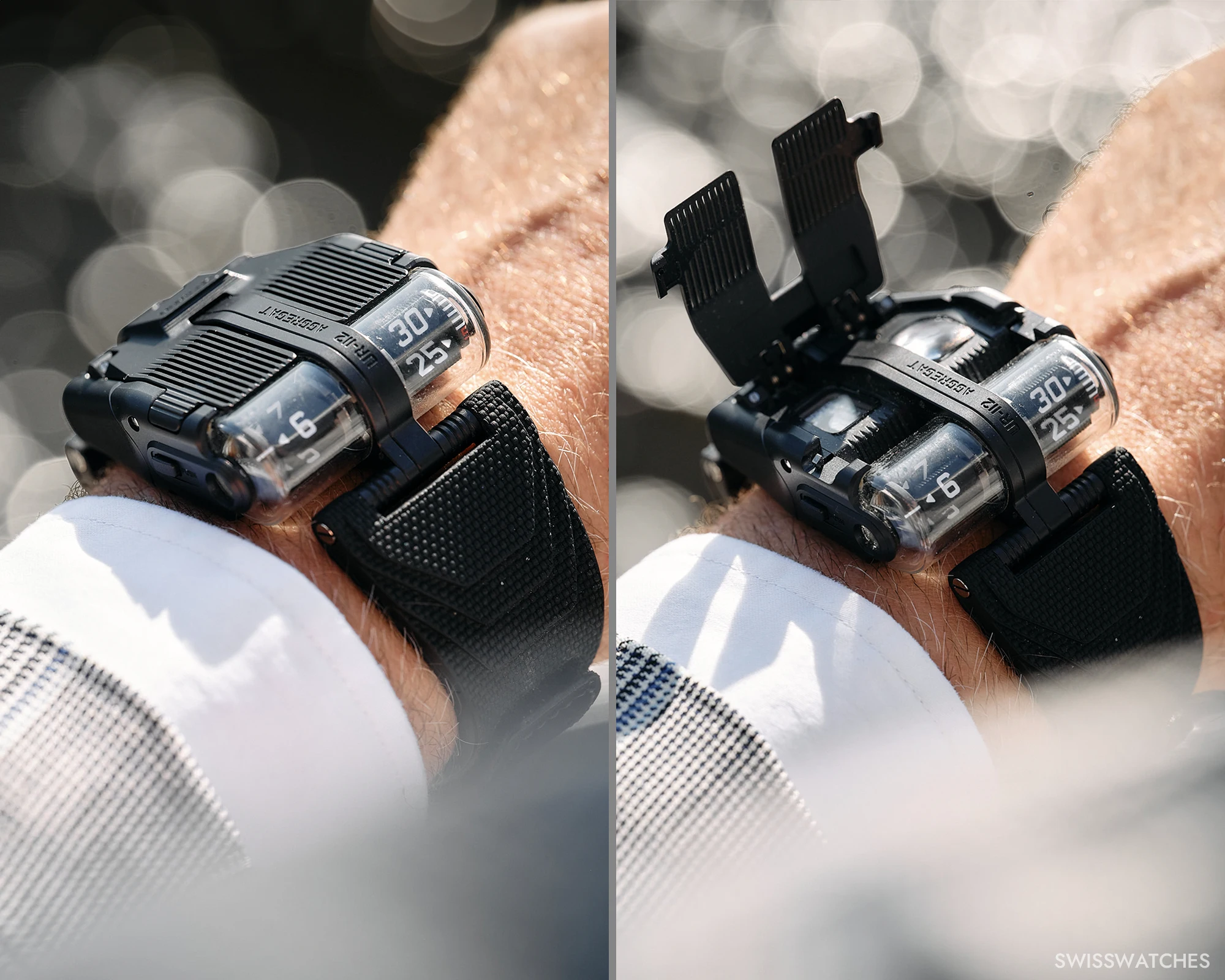
Urwerk UR-112 Dark Knight
The Urwerk UR-112 Dark Knight, created with Wempe, features a matte black DLC-coated titanium case that exudes stealth and sophistication. Its signature satellite hours display rotates around the perimeter, while the minute hand points to a central dial. The dark finish absorbs light, emphasizing the sharp, angular lines characteristic of Urwerk’s design language. This collaboration merges high-tech aerospace materials with gothic aesthetics, resulting in a timepiece that feels both futuristic and timeless.
The shift toward abstract horology
The watch industry is moving away from rigid symmetry and traditional dial layouts. In 2026, abstract horology has transitioned from a niche avant-garde experiment to a dominant design language. This shift is not merely aesthetic; it reflects a broader cultural fusion between digital art sensibilities and physical craftsmanship. Designers are treating the watch face as a canvas for non-representational expression, prioritizing texture, asymmetry, and material interplay over conventional time-telling clarity.
This trend is driven by a desire for individuality in an era of digital uniformity. As screens dominate our attention, physical objects like watches are increasingly valued for their tactile and visual uniqueness. Abstract designs offer a counterpoint to the standardized interfaces we interact with daily. They invite the wearer to engage with the object as a piece of wearable art rather than just a utility device.
Key elements defining this movement include asymmetrical case shapes and deconstructed dials. Brands are experimenting with off-center crowns, irregular lugs, and dial layouts that obscure traditional hour markers in favor of abstract patterns. Materials are often combined in unexpected ways, such as mixing matte finishes with high-polish edges to create visual depth. This approach results in timepieces that are visually complex and distinct, appealing to consumers seeking objects that stand out in a crowded market.
Breaking the circular symmetry
The watch industry’s long-standing reliance on the circular case is fracturing in 2026. Asymmetrical case structures have moved from niche experimental pieces to a dominant trend in abstract design. This shift represents more than a stylistic preference; it is a structural rebellion against the traditional constraints of horological geometry.
Designers are prioritizing dynamic tension over static balance. Instead of centering the dial within a perfect circle, cases now feature off-axis crowns, irregular lugs, and offset bezels. These elements force the eye to move across the face, creating a sense of motion even when the watch is still. The result is a timepiece that feels active and engaged, rather than passive.
This approach allows for greater experimentation with materials and finishing. Without the symmetry to hide behind, the interplay between brushed steel, polished edges, and matte textures becomes the focal point. The asymmetry highlights the craftsmanship involved in shaping materials that do not naturally lend themselves to uniformity. It is a bold statement that rejects the comfort of the familiar circle in favor of the intrigue of the irregular.
Five standout abstract concepts
The trend toward abstraction in 2026 is not about removing function, but about reinterpreting the dial as a canvas. Watchmakers are moving away from traditional indices and sub-dials, opting instead for geometric patterns, material contrasts, and sculptural elements that demand a second look. These designs prioritize visual interest over immediate legibility, turning the wrist into a space for micro-architecture and abstract art.
1. The Ceramic Micro-Sculpture Dial
Some brands are treating the dial surface as a topographical map. Using colored ceramics, rubber, and even diamonds, these watches feature raised, abstract micro-sculptures that catch light differently depending on the angle. The effect is less like a timepiece and more like a piece of modern jewelry. The contrast between the matte and polished surfaces creates a depth that flat prints cannot achieve, making the watch face feel three-dimensional and tactile.
2. Concentric Master Chronometer Rings
Legibility meets abstraction through concentric design. Instead of traditional hour markers, some 2026 models use a contrasting circular ring to denote the minutes or seconds, often encircling the movement’s technical credentials like "Master Chronometer" text. This creates a hypnotic, target-like visual that draws the eye to the center. The abstraction lies in the reduction of data: the watch tells time through position and contrast rather than explicit numbers, offering a clean, minimalist aesthetic that still feels technical.
3. Deconstructed Case Architecture
Abstraction extends beyond the dial to the case itself. We are seeing cases that appear "deconstructed" or layered, where the bezel, crystal, and case back seem to float or overlap in unexpected ways. These designs often use irregular shapes or asymmetrical lugs that challenge the traditional round or rectangular forms. The result is a watch that looks like it was assembled from separate geometric blocks, creating a sense of movement even when the watch is still.
4. Monochrome Material Play
One of the most striking abstract trends is the use of monochrome palettes where the abstraction comes from texture rather than color. A watch might be entirely black, but the dial features a mix of brushed, polished, and matte finishes that create a subtle, abstract pattern. This approach relies on the interplay of light and shadow to reveal details, making the watch appear different in various lighting conditions. It is a sophisticated form of abstraction that rewards close inspection.
5. Geometric Index Abstraction
Traditional hour markers are being replaced by abstract geometric shapes. Instead of dots or bars, markers might be tiny triangles, squares, or even irregular shards of metal or ceramic. These shapes are often arranged in non-linear patterns or spaced unevenly, creating a visual rhythm that is more artistic than functional. This trend is particularly popular in avant-garde designs that prioritize style, turning the dial into a puzzle of shapes that the wearer must decode.

As an Amazon Associate, we may earn from qualifying purchases.
Comparing Abstract Design Approaches
Abstract design in 2026 watches moves beyond simple minimalism into complex material play and structural experimentation. The five styles highlighted this year—ranging from micro-sculptured ceramics to asymmetrical cases—each solve the problem of legibility and visual interest differently. Understanding these distinctions helps clarify why a specific aesthetic resonates with your personal style.
The following comparison breaks down the primary design strategies, focusing on the materials and dial structures that define each approach.
| Design Approach | Key Materials | Dial Structure | Visual Influence |
|---|---|---|---|
| Micro-Sculpture | Ceramic, rubber, diamond | Abstract topography | Sculptural art |
| Asymmetrical | Titanium, steel | Off-center balance | Deconstructivism |
| Minimalist | Matte metal, sapphire | Negative space | Bauhaus |
| Textured | Brushed steel, ceramic | Concentric rings | Industrial |
| Digital Hybrid | Resin, glass | Pixel abstraction | Cyberpunk |
Watch trends for 2026 explained
The shift toward abstract and AI-inspired designs in 2026 reflects a move away from literal time-telling toward personal expression. Designers are using algorithmic patterns and non-traditional materials to create pieces that feel more like wearable art than mechanical instruments.
This trend prioritizes visual complexity over conventional legibility. Faces often feature distorted geometries, layered textures, and asymmetrical layouts that challenge the eye. These elements signal a departure from the minimalist aesthetics that dominated the previous decade.
No comments yet. Be the first to share your thoughts!