


In today’s volatile blockchain market, with Ethereum trading at $1,954.98 after a 0.94% dip over the past 24 hours, startups can’t afford the drag of managing their own nodes. Launching an app-chain traditionally means wrestling with infrastructure nightmares: constant uptime monitoring, sequencer maintenance, and scaling pains that divert precious resources from core innovation. Enter Rollup-as-a-Service (RaaS) for startups – a streamlined path to RaaS app-chain deployment that lets teams skip blockchain node management alternatives altogether and focus on building what matters.

RaaS platforms like those powered by abstract rollup technology for developers handle the heavy lifting. They provide pre-built rollups – optimistic or zero-knowledge – that settle securely on Layer 1 chains such as Ethereum. This isn’t just convenience; it’s a strategic edge. As Ethereum’s price fluctuates between $1,935.31 and $1,981.94 in the last day, market conditions demand agility. Startups using RaaS deploy seamless rollup launch for web3 projects in minutes, not months, capturing fees from transactions and data storage while inheriting Ethereum’s security.
The Hidden Costs of Self-Managed Rollups
Picture this: your startup pours capital into a DevOps team just to keep nodes humming. According to insights from Mokshya Protocol, traditional rollups force projects to hire large technical squads for complex operations, ballooning costs. Nasscom highlights how this model strains economic sustainability, with expenses concentrated on infrastructure rather than growth.
Early-stage teams face even steeper hurdles. Intel Market Research pegs blockchain startups as the prime RaaS audience, precisely because they sidestep heavy DevOps overhead with turnkey setups. Without RaaS, you’re not just managing nodes; you’re betting against scalability bottlenecks that choke transaction throughput during peak demand. Halborn notes RaaS eases building atop Ethereum, but the flip side of DIY? Endless debugging, compliance risks, and opportunity costs as competitors race ahead.
I’ve seen it firsthand in risk assessments: a single outage can erode user trust faster than any bull run builds it. Ethereum at $1,954.98 underscores the need for reliability; volatile prices amplify the stakes for dApps handling real value.
RaaS Providers Reshaping Startup Deployments
Leading RaaS outfits are tailoring solutions for speed and customization. Instanodes supports both zk-Rollups and Optimistic Rollups with built-in sequencers, integrating seamlessly with Ethereum, Polygon, and Binance Smart Chain. AltLayer’s ‘flash layers’ cater to ephemeral needs like NFT drops or gaming events, proving rollups can flex for niche demands.
Caldera emphasizes developer tooling for launches in minutes, while Conduit delivers production-ready OP Stack rollups with ironclad security. Gelato Rollups brings DeFi-ready zk integrations, automating what once took weeks. Placeholder. vc frames rollups as virtual blockchains in the modular era – tunable for performance or compliance, as long as outputs settle frequently on L1.
These platforms echo Eco’s vision: custom rollup chains deployed in minutes versus months. For startups, this means modulating networks to exact specs, boosting transactions per second without main-chain congestion, per Boosty Labs and Rapid Innovation.
Capturing Value Without the Overhead
RaaS flips the economics. Ankr points out developers retain network value through transaction and storage fees – revenue streams untapped in congested L1s. Dojima Foundation stresses faster times and lower costs by offloading from the main chain. It’s sustainable scalability: costs distribute predictably, not spiking with usage.
Consider the math. Node ops alone can eat 30-50% of early budgets; RaaS slashes that, freeing funds for marketing or liquidity. In my FRM practice, I’ve modeled these shifts: projects leveraging RaaS see 2-3x faster time-to-market, critical when ETH hovers at $1,954.98 amid adoption waves.
Ethereum (ETH) Price Prediction 2027-2032
Factoring Rollup-as-a-Service (RaaS)-Driven Scalability Improvements for Startups Launching App-Chains
| Year | Minimum Price | Average Price | Maximum Price |
|---|---|---|---|
| 2027 | $2,800.00 | $4,000.00 | $6,000.00 |
| 2028 | $3,500.00 | $5,500.00 | $9,000.00 |
| 2029 | $4,500.00 | $7,500.00 | $12,000.00 |
| 2030 | $6,000.00 | $10,000.00 | $16,000.00 |
| 2031 | $8,000.00 | $13,500.00 | $22,000.00 |
| 2032 | $10,500.00 | $18,000.00 | $28,000.00 |
Price Prediction Summary
RaaS platforms like Instanodes, AltLayer, Caldera, Conduit, and Gelato Rollups are revolutionizing Ethereum by enabling startups to deploy scalable rollups rapidly without node management. This drives massive ecosystem growth, higher TVL, and dApp adoption. From a 2026 baseline of ~$1,955, ETH is projected to see bullish trajectories with average prices rising ~40% CAGR to $18,000 by 2032, reflecting bearish mins in corrections and bullish maxes in adoption surges.
Key Factors Affecting Ethereum Price
- RaaS adoption accelerates L2 rollup deployments (ZK and Optimistic), reducing costs and boosting Ethereum transaction throughput
- Increased startup innovation in DeFi, gaming, NFTs via app-chains, enhancing ETH network utility and fees
- Market cycles: Post-2026 recovery with bull runs tied to upgrades and halving-like events
- Regulatory clarity supporting scalable blockchain models, favoring Ethereum’s dominance
- Technological edge from RaaS providers’ integrations, mitigating L1 congestion
- Competition dynamics: ETH benefits as settlement layer despite L2 proliferation
- Macro factors: Institutional inflows and global crypto adoption amplifying scalability gains
Disclaimer: Cryptocurrency price predictions are speculative and based on current market analysis.
Actual prices may vary significantly due to market volatility, regulatory changes, and other factors.
Always do your own research before making investment decisions.
Dojima adds two core types – optimistic (cheaper, fraud-proven) versus ZK (instant finality, pricier proofs) – letting startups pick based on risk profiles. My take? For most web3 projects, optimistic suffices early, scaling to ZK as volumes grow. This choice, unburdened by infra woes, empowers bold innovation.
Risk management in my FRM world demands balancing speed with safeguards. RaaS isn’t flawless – Mokshya Protocol flags limitations like dependency on providers for uptime and potential centralization if sequencers lag. Yet, for startups, the trade-off tilts heavily toward acceleration. I’ve assessed deployments where RaaS cut breach risks by outsourcing to audited infra, inheriting Ethereum’s $1,954.98-anchored security model.
Streamlining Deployment: A Practical Roadmap
Transitioning to RaaS app-chain deployment starts with alignment: define your rollup type, target L1, and customization needs. Providers like Caldera and Conduit abstract these into dashboards, but the real win is iteration velocity. Link your wallet, configure parameters, and deploy – all without touching a node.
Launch Your Custom App-Chain Fast: RaaS Step-by-Step Guide
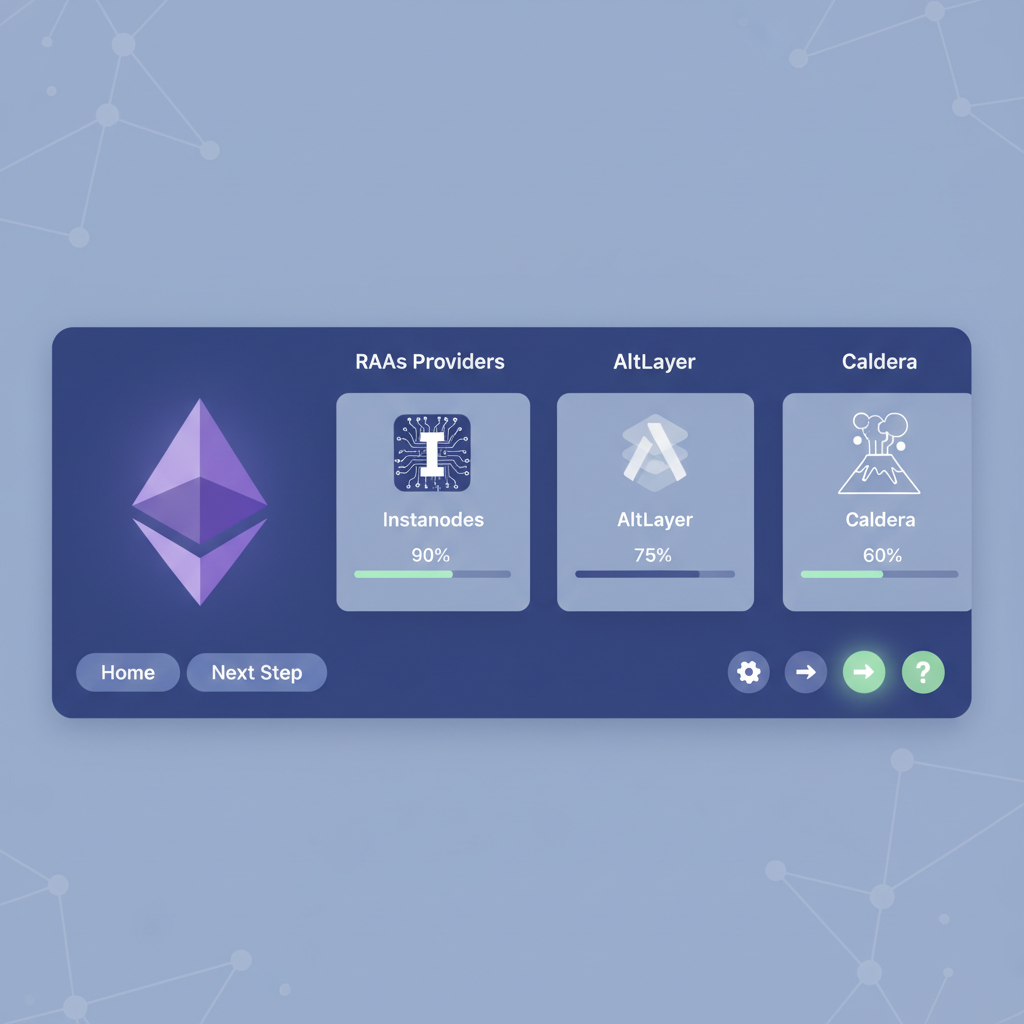
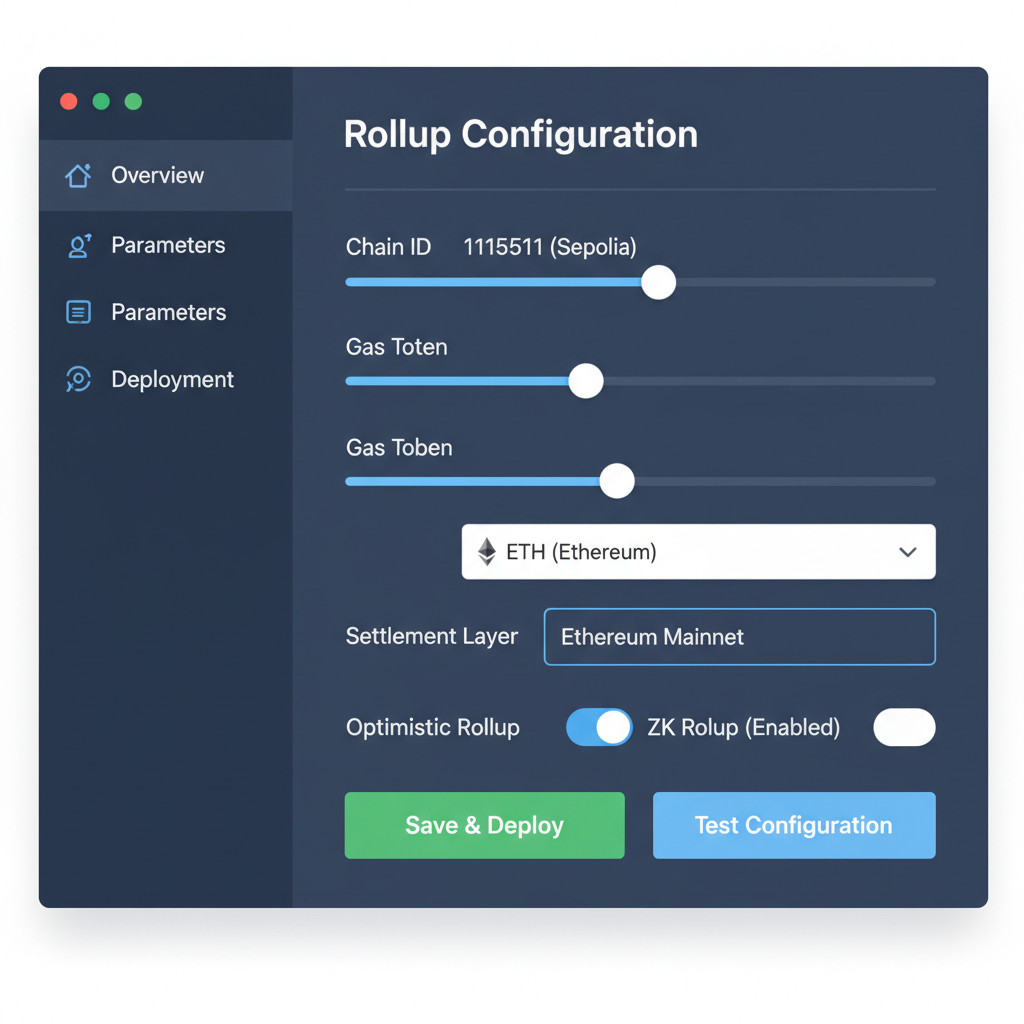
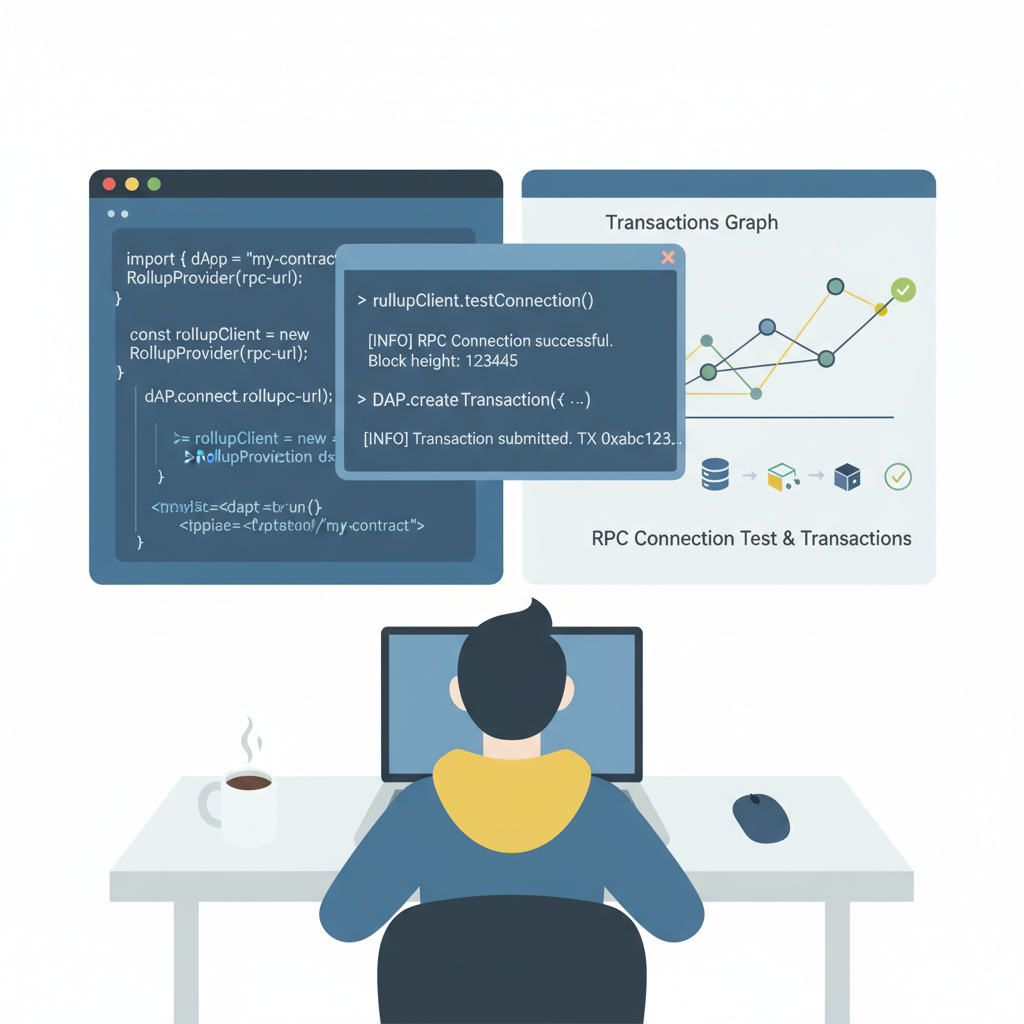
This process, detailed in our step-by-step guide, empowers even solo founders to spin up production chains. Gelato’s DeFi hooks or AltLayer’s flash layers add plug-and-play value, while abstract rollup technology ensures modularity. In practice, startups report 80% faster launches, per Intel Market Research’s outlook on RaaS through 2032.
Top RaaS Providers at a Glance
Choosing the right platform hinges on your stack and scale. Here’s a snapshot of leaders reshaping rollup as a service for startups:
Comparison of Top RaaS Providers 🚀
| Provider | Rollup Types | Deployment Time | Integrations | Key Strength | Pricing Model |
|---|---|---|---|---|---|
| Instanodes | ZK & Optimistic 🔒⚡ | Hours ⏱️ | Ethereum, Polygon, BSC 🔗 | Custom deployment & sequencers 💪 | Usage-based 💰 |
| AltLayer | Flash Layers (Ephemeral) 🎇 | Instant ⚡ | NFT drops, Gaming 🎮 | Event-optimized 🚀 | Pay-per-use 💸 |
| Caldera | App-chains (ZK/Optimistic) 📱 | Minutes ⏱️⚡ | Developer tooling 🛠️ | Rapid launch & UX ✨ | Tiered 📈 |
| Conduit | OP Stack (Optimistic) 🛡️ | Hours 🔧 | Production infra 🏗️ | Secure & high-perf 🔒 | Usage 💳 |
| Gelato | ZK-Rollups 🔐 | Fast 🚀 | DeFi protocols 🤝 | Prebuilt integrations ⚙️ | Subscription + Usage 📋 |
| Abstractwatch | ZK & Optimistic 🌀 | Minutes ⚡ | L1 chains & monitoring 🔗👁️ | Security-focused watchtower 🛡️ | Custom 💼 |
Abstractwatch. com’s Rollup-As-A-Service stands out with its focus on enterprise-grade support and seamless scalability, blending zk and optimistic options without lock-in. Unlike pure OP Stack plays, it prioritizes abstract rollup technology for developers, letting you fork and evolve independently.
Key RaaS Benefits for Startups
-

Cost Savings: Avoid hiring large DevOps teams and managing nodes, drastically reducing infrastructure expenses (e.g., via providers like Instanodes).
-

Faster Time-to-Market: Deploy custom rollups in minutes instead of months using pre-built tools from Caldera or AltLayer.
-

Revenue Capture: Charge fees for transactions and data storage on your app-chain, monetizing network activity directly.
-

Security Inheritance: Leverage Ethereum’s proven security model without building custom validators from scratch.
-

Customization Flexibility: Tailor rollups with custom sequencers, integrations, and stacks for specific app needs (e.g., zk vs. optimistic).
These advantages compound in volatile markets. With Ethereum at $1,954.98, dipping 0.94% amid broader consolidation, low-latency rollups prevent front-running losses in DeFi or gaming dApps. Nasscom’s economic model rings true: distributed costs foster sustainability, turning fixed overhead into variable gains.
Real-World Wins and Future Horizons
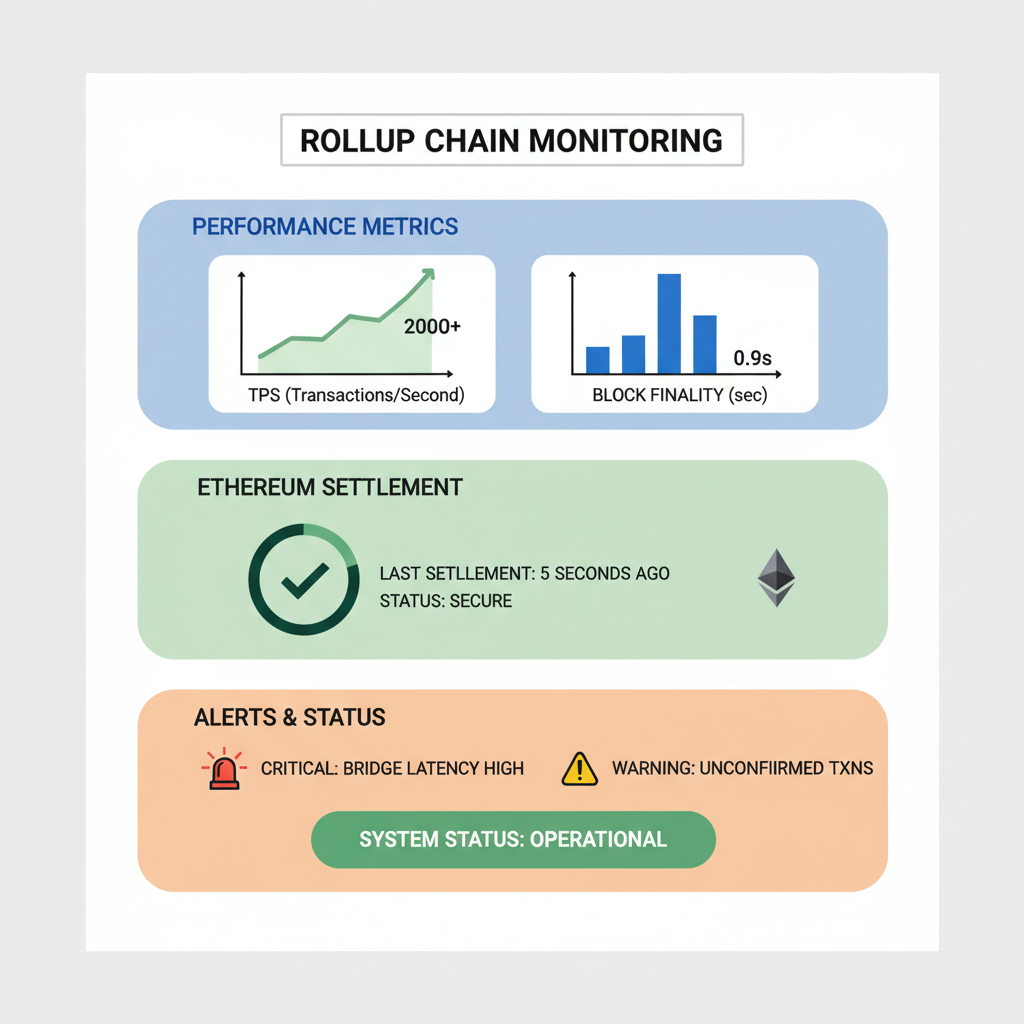
Startups like those in NFT marketplaces or DeFi protocols leverage RaaS for congestion-proof throughput. Rapid Innovation notes reduced main-chain load translates to sub-second finals, vital for user retention. Placeholder. vc’s modular vision positions rollups as tunable virtual chains – centralized enough for compliance, decentralized via frequent L1 posts.
Looking ahead, RaaS evolves with restaking and shared sequencers, per Bankless insights. My risk models project 5x adoption by 2027 for early-stage projects, as blockchain node management alternatives mature. Halborn’s ease-of-build mantra holds: focus on dApps, not ops.
For founders eyeing seamless rollup launch for web3 projects, Rollup-As-A-Service by abstractwatch. com delivers exactly that. Our platform’s robust docs, 99.99% uptime, and expert guidance minimize volatility exposure. Skip the node grind; deploy today and capture your slice of Ethereum’s ecosystem at $1,954.98. Measure twice, launch once.
About the Author