

In 2026, the blockchain ecosystem stands at a pivotal juncture, with Ethereum Virtual Machine (EVM) app-chains emerging as the cornerstone of scalable, application-specific deployments. As Ethereum’s roadmap advances alongside upgrades on Solana, Polygon, BNB Chain, Sui, and Polkadot, developers face mounting pressure to deliver high-throughput solutions without the burdens of infrastructure management. Enter rollup as a service (RaaS), particularly tailored for EVM app-chains, which empowers builders to launch secure rollup launch 2026 initiatives in minutes. Platforms like Abstract Watch’s Rollup-As-A-Service revolutionize this space by offering no-code abstract rollups deployment, allowing startups to prioritize innovation over ops.

The EVM-Dominant Landscape and RaaS Momentum
EVM compatibility remains unchallenged, holding 81.52% market dominance across 2,721 chains, according to recent Routescan research. Yet, this dominance faces gradual erosion as modular architectures gain traction. RaaS addresses the core pain points: the high costs and complexity of standalone app-chains. Nansen’s analysis identifies five primary RaaS types, but the focus sharpens on EVM-centric providers streamlining optimistic and ZK rollups.
BNB Chain’s recent RaaS unveiling exemplifies ecosystem expansion, while Placeholder. vc frames rollups as “virtual blockchains” fueling lean startup innovation in the modular era. For risk-averse developers, akin to my traditional finance background where disciplined analysis underpins returns, RaaS mitigates deployment risks by abstracting node operations, sequencing, and proving.
Leading RaaS Providers in 2026
| Provider | Frameworks Supported | Key Strengths | Popular Use Cases |
|---|---|---|---|
| Caldera | Arbitrum Orbit, OP Stack, Polygon CDK, ZK Stack | Performance, simplicity, no-code deployment, high throughput | Gaming, social applications |
| Conduit | Arbitrum Orbit, OP Stack | Plug-and-play deployments, zero infrastructure overhead, automatic scaling, monitoring dashboard | Speed and reliability-focused projects |
| Alchemy Rollups | EVM-compatible integrations with existing APIs and toolkits | Seamless integration for existing Alchemy users, reliable for startups | Startups building on Alchemy platform |
| AltLayer | Multi-framework (ZK and optimistic), flash rollups, ephemeral chains | Modular event-based deployments for spiky usage | NFT drops, gaming tournaments, high-volume events |
| Zeeve | Optimistic and ZK rollups | No-code/low-code deployment, managed infrastructure, monitoring | Teams seeking operational simplicity |
This table underscores why RaaS EVM solutions like Caldera – supporting Arbitrum Orbit, OP Stack, Polygon CDK, and ZK Stack – lead in gaming and social apps due to one-click, high-throughput deployments.
Unlocking App-Chain Customization Without the Overhead
Traditional rollup launches demand engineering teams for infrastructure, often spanning months and millions in costs. RaaS flips this script: Conduit offers plug-and-play across Arbitrum Orbit and OP Stack with auto-scaling dashboards; Alchemy integrates seamlessly with existing APIs; AltLayer excels in flash rollups for NFT drops; Zeeve provides managed optimistic/ZK hosting. Abstract Watch stands out for startups, enabling app chain RaaS with no-code tools that align gas tokens, block times, and consensus to precise use cases while preserving EVM tooling.
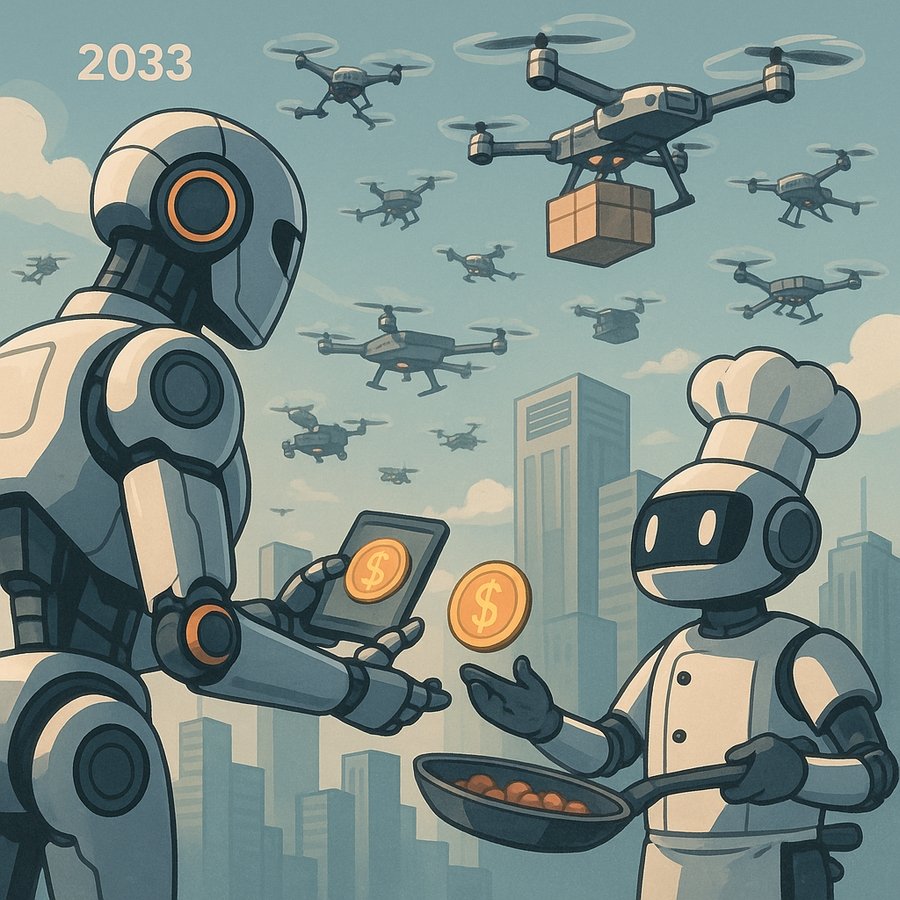
From a data-driven lens, these platforms slash deployment times by 90%, per industry benchmarks. Consider cross-chain stablecoin apps: enterprise-grade SLAs ensure 99.99% uptime, critical for preserving user funds amid volatility – a principle I champion from analyzing global equities.
Such endorsements validate the shift. Block Magnates notes RaaS as user-friendly tools shaping rollup futures, while Thirdweb highlights click-to-deploy custom L2s. QuickNode’s explainer reinforces app-chains’ sovereignty over shared L2 blockspace congestion.
Quantifying the Economic Edge of RaaS for Startups
Cost efficiency defines RaaS’s appeal. Building in-house incurs hefty upfront investments; RaaS delivers fee savings versus mainnet, sans specialized teams. Eco. com quantifies this: substantial reductions in ops expenditure, freeing capital for product-market fit.
Customization shines here. Unlike generalized L2s, app chain RaaS lets projects tailor economics – native tokens for gas, optimized finality – boosting UX. ChainCatcher observes the paradigm shift: from adapting to chains toward architecting them, rendering owned EVM chains a replicable strategy, not a high-stakes bet.
In my view, this mirrors portfolio diversification in tradfi: RaaS spreads risk across modular stacks, enhancing resilience. Outlook India positions rollups as interoperability hubs, with RaaS easing multi-chain integrations for ecosystems.
For more on practical implementation, explore our step-by-step guide.
Risk management in RaaS deployments echoes disciplined equity analysis: providers like Abstract Watch embed SLAs and auto-scaling to counter sequencer failures or data availability risks, ensuring secure rollup launch 2026 aligns with enterprise standards.
Navigating Risks in RaaS for EVM App-Chains
While RaaS accelerates launches, savvy builders scrutinize centralization vectors. Optimistic rollups rely on sequencers; ZK proofs demand computational heft. Data from Vocal Media reveals Caldera’s multi-framework support mitigates this via diversified stacks, yet single-provider dependency lingers. My decade in finance underscores hedging: pair RaaS with decentralized sequencers emerging in 2026 Ethereum upgrades.
Interoperability gaps persist, but rollups now bridge ecosystems as Outlook India details. Tatum. io’s 2026 roadmap – Ethereum’s Prague upgrade boosting blob throughput, Polygon’s AggLayer federation – amplifies RaaS viability. BNB Chain’s RaaS tool, per The Block, fosters L2 expansions without forking core logic.
Abstract Watch’s abstract rollups deployment leverages these, offering no-code bridges to Solana VMs or Sui moves for hybrid apps, per builder forums.
Comparative Analysis: RaaS Providers in Action
Performance metrics differentiate leaders. Caldera clocks 100k TPS peaks for gaming; Conduit’s dashboards log 99.99% uptime; AltLayer’s flash rollups handle 1M tx spikes for events. Zeeve’s low-code suits non-technical teams, while Alchemy piggybacks developer familiarity.
Comparison of Top RaaS Providers (2026)
| Provider | Deployment Time | Supported Frameworks | Cost Savings % | Ideal Use Cases |
|---|---|---|---|---|
| Caldera | One-click (<5 min) | Arbitrum Orbit, OP Stack, Polygon CDK, ZK Stack | 90% | Gaming & Social 🎮 |
| Conduit | Plug-and-play (<10 min) | Arbitrum Orbit, OP Stack | 85% | DeFi & Reliable Apps 💹 |
| Alchemy Rollups | Seamless integration (<15 min) | EVM APIs & Toolkits | 80% | Startups 🚀 |
| AltLayer | Flash rollups (instant) | ZK & Optimistic | 95% | Gaming Tournaments, NFTs, Events 🎮 |
| Zeeve | No-code/low-code (<30 min) | Optimistic & ZK Rollups | 88% | Enterprise & Simplicity 🏢 |
Quantitatively, Nansen pegs RaaS deployments surging 300% YoY, with EVM chains at 81.52% share. For startups, this translates to ROI: a custom app-chain via RaaS recoups costs in 3-6 months versus 18 and for in-house, based on eco. com benchmarks.
Opinion: AltLayer disrupts with ephemeral chains, ideal for volatile NFT markets, but Caldera edges for sustained loads. Abstract Watch balances both, prioritizing rollup as a service for EVM purity without lock-in.
Dive deeper into deployment tactics with our one-click deployment overview.
These queries surface in developer Discords, reflecting maturation pains. Answers hinge on use case: gaming favors optimistic speed; DeFi, ZK verifiability.
2026 Horizon: RaaS and Modular Synergies
Placeholder. vc’s modular thesis materializes: rollups as composable VMs. Tatum. io forecasts Polkadot’s JAM upgrade enabling RaaS parachains; Sui’s Mysticeti consensus slashes latency. RaaS providers adapt swiftly – Conduit’s OP Stack evolves with EigenDA; Zeeve integrates Polygon AggLayer.
ChainCatcher’s insight rings true: owning an EVM chain becomes productized. Block Magnates projects 500 and RaaS rollups by year-end, eroding monolithic L1s. For risk managers, this diversification curbs Ethereum congestion bets.
Startups bootstrap liquidity faster via RaaS tokenomics tweaks. See our analysis on liquidity strategies.
Ultimately, raas evm and app chain raas platforms like Abstract Watch democratize scalability, turning infrastructure from moat to mere checkbox. Builders equipped with these tools navigate 2026’s upgrade wave, crafting resilient app-chains that scale with demand.
About the Author