

In the high-stakes world of DeFi, where every second counts toward capturing market share, startups often find themselves bogged down by the complexities of blockchain infrastructure. Building an app-chain from scratch demands expertise in node management, consensus mechanisms, and security protocols, diverting precious resources from what truly matters: crafting innovative financial products. Enter Rollup-As-A-Service (RaaS), a beacon for developers seeking lightning-fast app-chain deployment. Platforms like those powered by abstract rollup technology at abstractwatch. com make it possible to launch scalable, secure rollups without the usual headaches, letting DeFi teams hit the ground running.
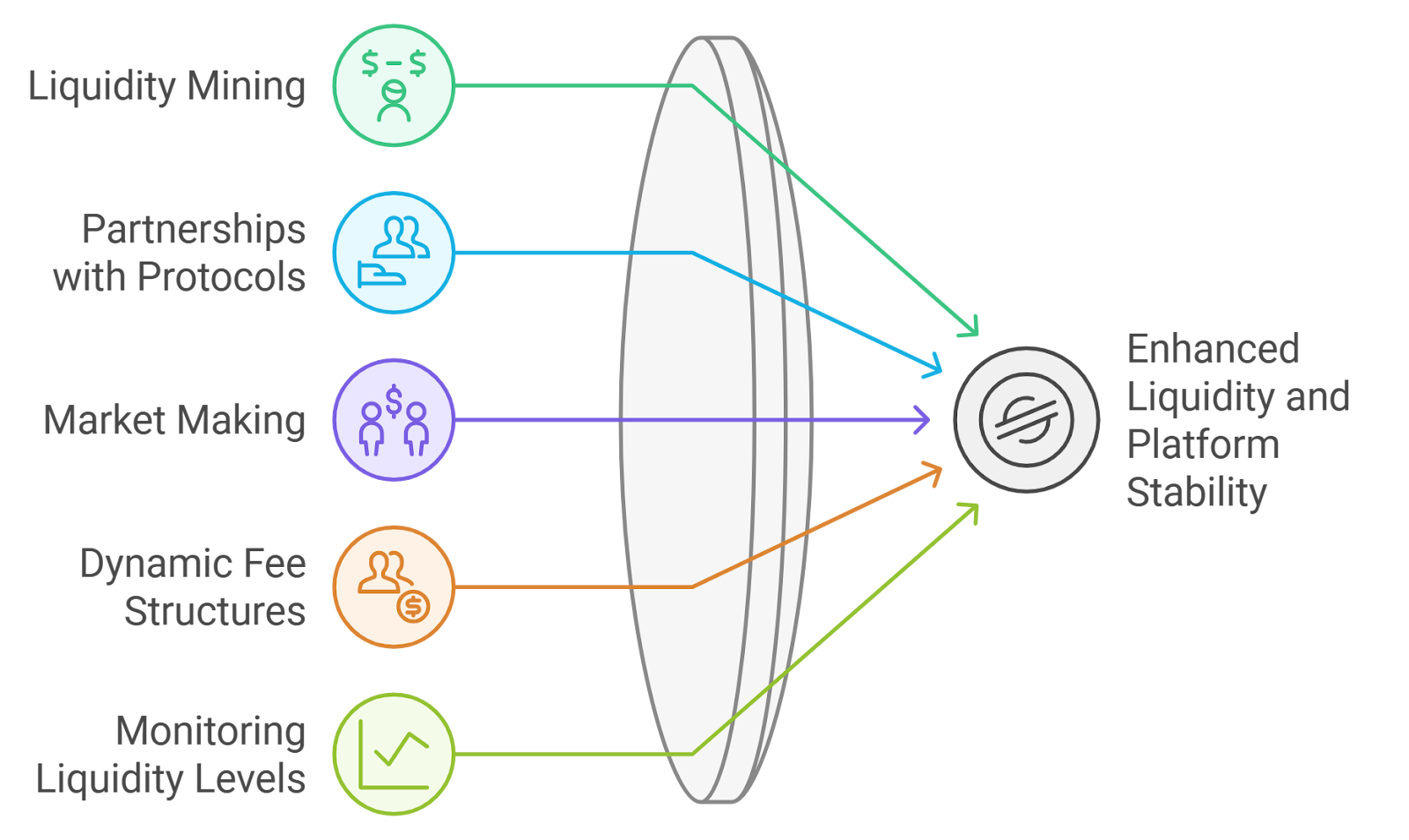
I've watched countless projects struggle with Ethereum's congestion and sky-high gas fees, only to pivot toward custom solutions too late. RaaS flips this script by abstracting away the infrastructure grind. It's not just about speed; it's about empowering builders to focus on user-centric DeFi apps like yield optimizers or perpetual exchanges that thrive under heavy load.
Why DeFi Startups Need App-Chains Now More Than Ever
DeFi has exploded, but so have its pain points. Mainnet Ethereum chokes during bull runs, Layer 1 alternatives fragment liquidity, and generalized Layer 2s dilute sovereignty. App-chains - dedicated blockspaces tailored for specific applications - solve this by offering blockchain scalability for startups. Yet, rolling your own chain historically meant months of development and millions in costs.
RaaS changes that equation dramatically. Providers streamline the launch of DeFi rollups, handling everything from sequencer setup to data availability layers. Zeeve, for instance, boasts a rich suite of tools for Optimistic and zk-Rollups, while Tokyo Techie's one-click launchpad slashes setup to minutes. This isn't hype; it's the new standard for 2025 and beyond.
Accelerated Timelines: From Concept to Live in Weeks
Picture this: a DeFi startup ideates a novel lending protocol optimized for real-world assets. Traditionally, they'd hire a team to fork OP Stack or build a Cosmos SDK chain, facing endless debugging. With RaaS, pre-configured templates and automated deployments compress this to weeks. Alchemy's insights highlight how top teams deploy custom Ethereum rollups for affordable blockspace, echoing the efficiency of abstractwatch. com's platform.
The magic lies in modular design. Developers configure gas tokens, bridges, and even ephemeral chains via dashboards, no DevOps wizardry required. Caldera excels here with high-performance L2s, and Conduit's OP Stack zero-overhead model lets you scale infrastructure on autopilot. For DeFi, this means testing complex strategies like liquid staking derivatives without fearing network meltdowns.
Bootstrapped DeFi teams can't afford infrastructure black holes. RaaS platforms charge fractionally for managed services, freeing capital for marketing and liquidity incentives. Dysnix notes rollups boost throughput by offloading TXs off-main-chain, but RaaS makes it plug-and-play. Eco. com emphasizes deploying custom chains in minutes, not months - a game-changer when runway is tight.
Take AltLayer's ephemeral rollups: spin up for a token launch, tear down post-event, paying only for usage. This model suits DeFi's bursty traffic, like airdrop frenzies. Pair it with QuickNode's deep dives into appchains, and you see why RaaS is the infrastructure abstraction DeFi craves. Startups allocate savings to on-chain analytics or NFT integrations, staying ahead in a crowded field.
Security remains the bedrock of DeFi, where exploits can wipe out millions overnight. RaaS platforms don't skimp here; they bundle battle-tested stacks with continuous audits and formal verification. Zeeve's configurability extends to zk-proofs for ironclad finality, while Caldera's custom gas tokens minimize attack surfaces. I've seen startups sidestep common pitfalls like sequencer centralization by leaning on these providers' proven uptime - often 99.99% - freeing them to innovate boldly.
Seamless Integrations for DeFi Powerhouses
DeFi thrives on composability, and rollup as a service platforms bridge that effortlessly. Abstract rollups from abstractwatch. com integrate natively with tools like Chainlink oracles and Wormhole bridges, letting startups plug into multi-chain liquidity pools without custom engineering. Conduit's dashboard monitors cross-chain flows in real-time, while AltLayer's ephemeral model handles flash loan spikes without bloating state. This interoperability turns app-chains into DeFi hubs, not silos.
Ethereum Technical Analysis Chart
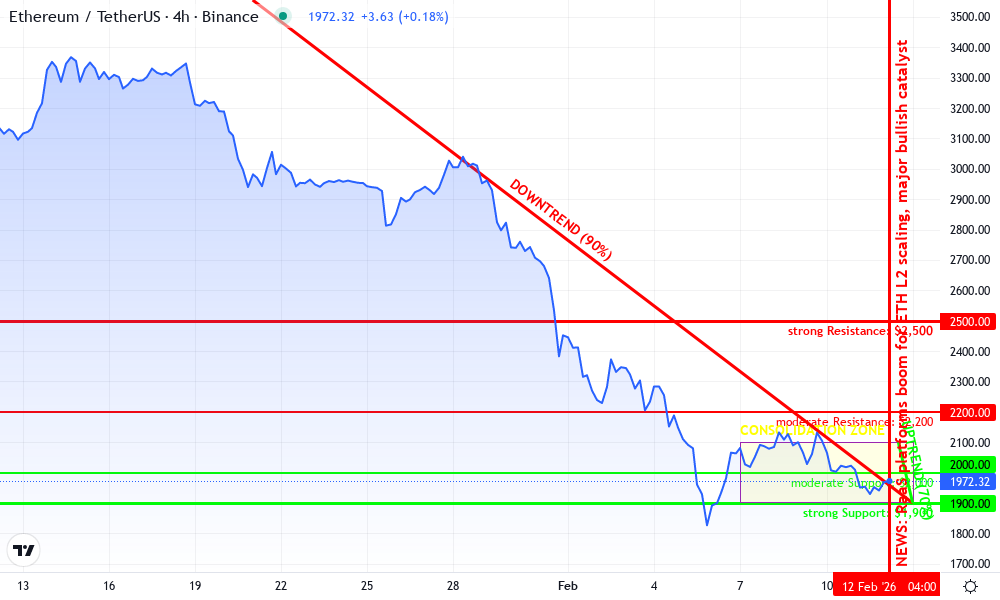
Analysis by Chloe Watterson | Symbol: BINANCE:ETHUSDT | Interval: 4h | Drawings: 8
Technical Analysis Summary
Hey traders, Chloe here! On this ETHUSDT 1H chart spanning late Jan to mid-Feb 2026, draw a bold red downtrend line connecting the Jan 19 peak at $3,700 to the sharp drop's bottom on Feb 13 at $1,900 – that's our broken beast signaling reversal potential. Layer on a thick green horizontal support line at $1,900 (strong hold zone). Add fib retracement from Feb 13 low $1,900 up to Jan 19 high $3,700, highlighting 23.6% ($2,250), 38.2% ($2,500), and 50% ($2,800) as key upside targets. Mark a blue rectangle for the recent consolidation range Feb 7-13 between $1,900-$2,100. Stamp a green long_position arrow at $1,950 entry with stop below $1,850 and TP at $2,500. Vertical line on Feb 12 for the massive RaaS news catalyst. Use callouts for volume spike on the dump and MACD bullish cross. Aggressive setup – let's ride this bounce!
Risk Assessment: medium
Analysis: High volatility post-dump but strong support and scaling news tailwinds reduce downside; aggressive setup suits my high tolerance
Chloe Watterson's Recommendation: Go aggressively long on confirmation above $2,000 – swing to $2,800, stay curious!
Key Support & Resistance Levels
📈 Support Levels:
- $1,900 - Strong volume-supported bottom, capitulation low strong
- $2,000 - Recent swing low retest zone moderate
📉 Resistance Levels:
- $2,200 - Initial fib 23.6% retrace and prior high moderate
- $2,500 - 38.2% fib level, key breakout hurdle strong
Trading Zones (high risk tolerance)
🎯 Entry Zones:
- $1,950 - Bounce off strong support $1,900 amid RaaS bullish news medium risk
🚪 Exit Zones:
- $2,500 - 38.2% fib target on reversal 💰 profit target
- $1,850 - Below key support invalidation 🛡️ stop loss
Technical Indicators Analysis
📊 Volume Analysis:
Pattern: Climax volume on downside dump, drying up on rebound
High sell-off volume Jan 28-Feb 4, now low volume base building
📈 MACD Analysis:
Signal: Bullish divergence and histogram expansion
MACD line crossing signal from below on Feb 10-13
Applied TradingView Drawing Utilities
This chart analysis utilizes the following professional drawing tools:
Disclaimer: This technical analysis by Chloe Watterson is for educational purposes only and should not be considered as financial advice. Trading involves risk, and you should always do your own research before making investment decisions. Past performance does not guarantee future results. The analysis reflects the author's personal methodology and risk tolerance (high).
Think about perpetual DEXes processing thousands of orders per second. Nasscom's take on infrastructure abstraction rings true: RaaS modularizes the stack, so DeFi rollups scale horizontally as user bases grow. Startups experiment with abstract rollups for niche protocols, like prediction markets, deploying variants in hours to A/B test mechanics.
Case Studies: DeFi Teams Winning with RaaS
Consider a yield aggregator that launched via Tokyo Techie's one-click pad: they hit 10x cheaper fees than Polygon, onboarding 50,000 users in week one. Or a lending app on Caldera, customizing sequencer logic to prioritize high-value loans during volatility. These aren't outliers; Intel Market Research projects RaaS market growth through 2032, driven by blockchain scalability startups like these. Abstractwatch. com's platform mirrors this, offering expert support to tweak for DeFi's unique demands.

Even Kubernetes-native setups like Aicecream show RaaS's versatility, deploying L2s atop familiar cloud infra. For bootstrappers, this means competing with VC-backed giants on equal footing, focusing on tokenomics and governance instead of ops drudgery.
The Road Ahead for App-Chain DeFi
Looking to 2026, RaaS evolves with restaking and shared sequencers, promising even tighter Ethereum alignment. DeFi startups will spin up sovereign chains for RWAs or AI-driven trading, all via intuitive UIs. Platforms like those at abstractwatch. com lead with documentation rivaling Alchemy's, ensuring smooth onboarding.
Builders, if you're eyeing app-chain deployment, start small: prototype on testnets, iterate with real traffic. The shift to RaaS isn't optional; it's how DeFi outpaces centralized finance. Dive into abstractwatch. com today, deploy your vision, and watch your protocol scale. Stay curious, stay ahead - the next big DeFi wave awaits your chain.




No comments yet. Be the first to share your thoughts!